
Undertaking Engineering Enterprise brings you a comprehensive guide to solar panels for your home in Kolkata and beyond. With years of expertise in solar installations, roofing solutions, and shed construction, we help homeowners transition to clean, affordable energy. This guide covers everything you need to know about residential solar panel systems.
Solar panels convert sunlight into electricity for your home. A typical residential solar panel system reduces your electricity bills by 80-90% within 5-7 years of installation. Homeowners in India increasingly choose solar energy because government subsidies now cover 40-60% of installation costs.
Your home needs a solar system that matches your electricity consumption. The average household in India uses 500-700 units monthly, requiring a 3-5 kW solar panel system. Once installed, these systems generate clean, renewable energy for 25+ years with minimal maintenance.
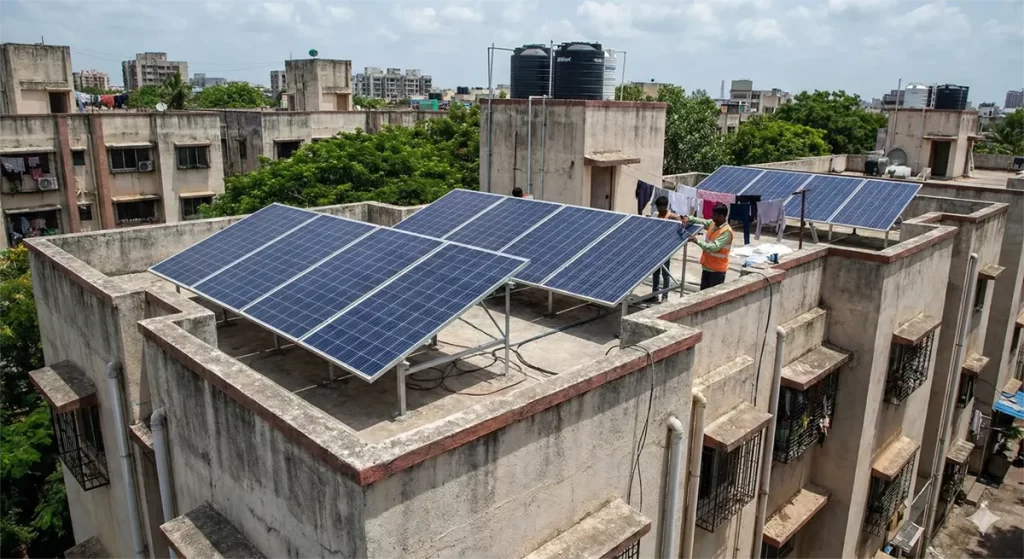
The 3kW solar system is India’s most popular residential solution. It generates 12-15 units of electricity daily under ideal sunlight conditions. Here’s the exact 2026 pricing breakdown:
| System Type | Cost Before Subsidy | Cost After Subsidy | Govt. Subsidy |
|---|---|---|---|
| 3kW On-Grid System | ₹2,20,000 - ₹2,50,000 | ₹1,42,000 - ₹1,70,000 | ₹78,000 |
| 3kW Hybrid System | ₹3,40,000 - ₹4,50,000 | ₹2,62,000 - ₹3,72,000 | ₹78,000 |
| 3kW Off-Grid System | ₹3,60,000 - ₹4,80,000 | No subsidy applicable | None |
Solar Panels (3kW): ₹60,000 – ₹90,000
Inverter & Accessories: ₹15,000 – ₹40,000
Mounting Structure & Installation: ₹10,000 – ₹25,000
Total Before Subsidy: ₹85,000 – ₹1,55,000
The on-grid system offers the best value for most homeowners because it connects to the electricity grid, allowing you to sell excess power back and receive government subsidies.
India’s PM Surya Ghar Muft Bijli Yojana provides the most substantial solar subsidy program ever launched. This scheme aims to deliver free electricity to 1 crore Indian households by 2027.
| System Capacity | Direct Subsidy | Additional State Subsidy (Some States) |
|---|---|---|
| 1 kW | ₹30,000 | Up to ₹20,000 |
| 2 kW | ₹60,000 | Up to ₹25,000 |
| 3 kW or More | ₹78,000 | Up to ₹30,000 |
Indian citizens with property ownership
Must have an electricity connection in your name
Available rooftop space for solar panels
No existing subsidized solar system
Key Benefit: Subsidy is transferred directly to your bank account within 30 days of installation and DISCOM approval. This means you pay the reduced price immediately, not after months of paperwork.
Determining the right system size is crucial. Too small, and you won’t save enough. Too large, and you waste money.
Step 1: Check your monthly electricity bill. It shows your average monthly consumption in units (kWh).
Step 2: Use this formula:
1 kW of solar system generates approximately 4 units per day (120 units monthly)
For 500-600 monthly units needed: Install a 4-5 kW system
For 600-800 monthly units needed: Install a 5-7 kW system
Step 3: Consider your rooftop space. A 3kW system requires 250-300 square feet of shadow-free rooftop.
| Monthly Electricity Consumption (Units) | Recommended System Size | Rooftop Space Needed |
|---|---|---|
| 300-500 units | 2-3 kW | 200-250 sq.ft |
| 500-700 units | 3-4 kW | 250-350 sq.ft |
| 700-900 units | 5-6 kW | 350-450 sq.ft |
| 900-1100 units | 7-8 kW | 450-600 sq.ft |
Pro Tip: Most homes benefit from 3-4 kW systems because this size qualifies for maximum government subsidy (₹78,000) and covers typical household electricity needs.
Choosing the right manufacturer matters for warranty, efficiency, and long-term performance. India’s top solar panel manufacturers dominate the residential market.
30+ years operational experience
Panel efficiency: 19-22%
25-year performance warranty
Strong after-sales service network across India
Best for homeowners prioritizing reliability
India’s largest integrated solar manufacturer
Cutting-edge manufacturing technology
25-year comprehensive warranty
Competitive pricing
Growing service network nationwide
India’s largest solar module manufacturer (13+ GW capacity)
25-year performance warranty
Wide range of panel options
Strong domestic and export presence
Best for budget-conscious buyers seeking quality
Advanced bifacial and glass-glass modules
25-year performance guarantee
Efficient panel design (19-22% efficiency)
Growing international recognition
Ideal for high-efficiency requirements
Global brand with strong India presence
25-year performance warranty
High-efficiency modules (20-23%)
Excellent warranty support
Best for those seeking international-grade quality
Selection Tip: For homes in Kolkata, Tata Power Solar and Waaree Energies offer excellent local support and are trusted by thousands of Bengali households.
Installation costs vary significantly based on complexity, location, and system type. Understanding every cost component helps you budget accurately.
Professional Labor: ₹20,000 – ₹50,000
Site survey and design: ₹2,000-5,000
Mounting structure installation: ₹8,000-15,000
Electrical wiring and connections: ₹5,000-15,000
Grid approval and inspection: ₹3,000-10,000
Additional Costs: ₹5,000 – ₹20,000
Permits and approvals: ₹2,000-5,000
Cables and connectors: ₹2,000-8,000
Safety equipment and misc: ₹1,000-7,000
Roof condition: Damaged roofs need repairs before installation
Roof type: Concrete takes less time than tin or tiled roofs
Distance from grid: Remote areas cost more
System complexity: Larger systems require more installation hours
Local labor rates: Urban areas generally cost more than rural areas.
Cost Optimization: Most professional installers include permitting and grid connection in their service packages, making your budget easier to manage.
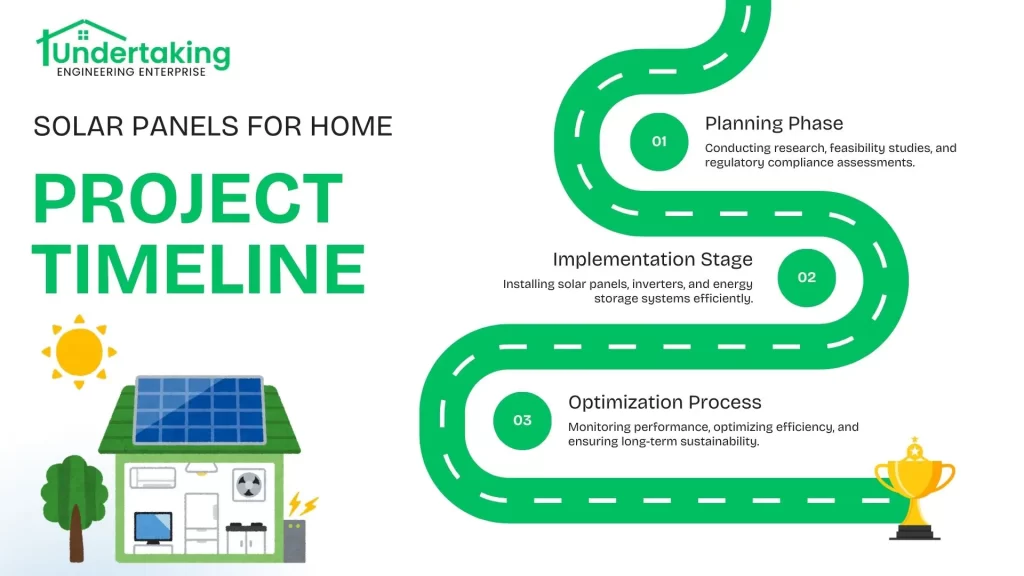
Understanding the installation process helps you prepare and know what to expect. Professional installation typically takes 1-3 days.
A qualified solar engineer visits your home to assess feasibility. They evaluate:
Roof orientation and shading
Structural integrity and load capacity
Available space and sunlight exposure
Optimal panel positioning (typically 18-36 degrees angle)
This assessment determines your system size and design specifications.
Your installer creates a customized design showing:
Exact panel placement on your roof
Wiring configuration (series or parallel)
Inverter and electrical panel locations
Net metering setup (if on-grid)
Permits are then applied for through local municipal authorities.
The installation team inspects your roof thoroughly to ensure it’s structurally sound. Any necessary repairs or cleaning are completed before mounting installation begins.
Metal mounting brackets are securely attached to your roof structure. These brackets:
Must be firmly fastened to the roof rafters or solid structural elements
Are carefully leveled for optimal sun exposure
Are typically made of black anodized aluminum
This step is critical for system stability and longevity.
Once mounting is secure, individual panels are attached using the provided clamps and hardware. Each connection is verified to ensure:
Panels are aligned properly
All bolts and nuts are adequately tightened
MC4 connectors are properly seated
Professional electricians establish all electrical connections. This includes:
Connecting panels in a series or parallel configuration
Running DC wiring from panels to the inverter
Installing high-quality cables to minimize energy loss
Ensuring proper grounding and insulation
Safety Note: Your main electricity supply is switched off during all wiring work.
The inverter (which converts DC to AC electricity) is installed indoors, typically near your main electrical panel. It’s connected to:
Solar panel wiring array
Main electrical panel
Net metering box (for on-grid systems)
Backup battery system (for hybrid systems)
For on-grid systems, the installation company coordinates with your local utility (DISCOM) for grid connection approval. Final inspections verify:
Voltage and current measurements
System performance under load
Safety features (fuses, breakers, grounding)
Compliance with electrical codes
Once approved, your system is activated and begins generating power.
Timeline Expectation: From site survey to activation typically takes 2-4 weeks, depending on permit processing.
Finding a trusted local installer is crucial for after-sales support and maintenance. Undertaking Engineering Enterprise serves the Kolkata region with 15+ years of expertise.
MNRE Approved: Verify Ministry of New and Renewable Energy certification
Experience: Minimum 5+ years in residential installations
Warranty Coverage: 25-year panel warranty + 5-10 year workmanship warranty
After-Sales Service: Regular maintenance plans and quick response for issues
Customer Reviews: Check local references and online ratings
Financing Options: Flexible payment plans and subsidy assistance
Permit Handling: They handle all government approvals and documentation
Undertaking Engineering Enterprise checks all these boxes, with proven installation across Kolkata for solar panels, car sheds, and commercial roofing solutions.
When buying a solar system, you have several options depending on your preference and budget.
Tata Power Solar, Adani Solar, Waaree Energies
Best for bulk orders and commercial installations
Often requires working through authorized distributors
Local certified installers and dealers
Can customize designs for your specific needs
Often provide financing and subsidy assistance
Best for most homeowners
Not recommended for residential systems
Difficult to ensure proper installation
Limited warranty support and after-sales service
Companies like Undertaking Engineering Enterprise
Handle design, supply, and installation end-to-end
Provide comprehensive warranty and maintenance
Recommended option for hassle-free setup
When purchasing through an authorized dealer or system integrator, you receive:
Professional site survey and design
High-quality solar panels from top brands
Certified inverter and accessories
Professional installation by trained technicians
Grid connection and permit handling
25-year panel warranty
5-10 year installation warranty
Annual maintenance service
With 15+ years of expertise, Undertaking Engineering Enterprise specializes in comprehensive solar panel installations combined with premium shed construction and roofing solutions. Our integrated approach ensures:
Professional site assessment and customized design
Installation of systems from top brands (Tata, Adani, Waaree)
Complete grid connection and approval handling
Subsidy assistance and financing options
Post-installation maintenance and support
Durable car sheds with integrated solar roofing
Goat farm roofs with solar power generation
Commercial sheds with maximum energy efficiency
Premium waterproof construction built to last 25+ years
Local expertise in Kolkata’s climate and regulations
15+ years successful track record
Comprehensive warranty coverage
Transparent pricing with no hidden costs
Direct government subsidy handling
End-to-end project management
3kW systems are ideal for average Indian homes consuming 500-700 units monthly
Government subsidies cover 40-60% of installation costs under PM Surya Ghar Yojana
On-grid systems offer the best return on investment with maximum subsidy benefits
Installation takes 1-3 days once permitting is complete
25-year warranty on panels means decades of clean, free electricity generation
Payback period of 5-7 years, after which electricity is essentially free
Integrated solar roofing through companies like Undertaking Engineering Enterprise provides 26% more panel capacity
Solar panels for home are no longer a luxury but a smart financial investment. With government subsidies covering nearly half the cost and installation lasting only days, transitioning to solar has never been more accessible. Whether you’re in Kolkata or elsewhere in India, professional installation from experienced companies like Undertaking Engineering Enterprise ensures your system generates maximum returns.
Start your solar journey today with a free site survey and quotation. Our team will guide you through government subsidies, financing options, and the complete installation process. Transform your home into an energy-independent asset while contributing to India’s clean energy future.
Contact Undertaking Engineering Enterprise for your free solar consultation today.
Most roofs work, but they must be structurally sound and receive 5-6 hours of unobstructed sunlight daily. Our site survey determines feasibility.
Premium solar panels last 25-30 years. Most manufacturers provide 25-year performance warranties.
Yes, systems generate approximately 20-25% of rated capacity on cloudy days. Power generation is optimized during sunny hours.
Yes. Most on-grid systems are scalable and can be expanded as your needs grow.
On-grid systems feed excess power back to the utility grid. You receive credits (net metering) that reduce your monthly bills.
Minimal maintenance—basic cleaning every 6 months keeps panels efficient. Most systems operate maintenance-free otherwise.