
Understanding folding shed roof pricing in India requires navigating multiple factors, including material quality, design complexity, installation scope, and regional market variations. This comprehensive guide explores the complete landscape of folding and retractable roof systems, providing homeowners, business owners, and facility managers with actionable insights to make informed investment decisions. Whether you’re considering a residential terrace cover, commercial parking solution, or industrial facility upgrade, this article breaks down pricing structures, compares competing technologies, and reveals how to select the right contractor for your specific needs.
Overview of Folding Shed Roofs
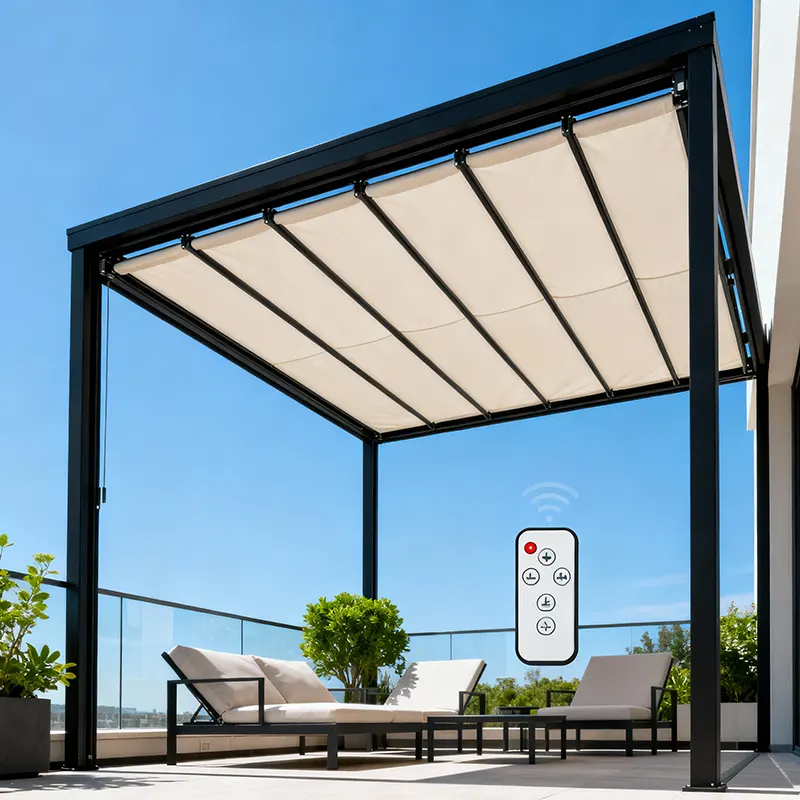
Folding shed roofs represent a revolutionary approach to managing outdoor spaces, combining flexibility, durability, and a modern aesthetic appeal. These structures feature innovative mechanical systems that enable roofing panels or fabric coverings to retract or fold away, transforming the way we utilize outdoor areas across residential, commercial, and industrial applications. The mechanism operates through a series of interlocking frames, typically constructed from steel, aluminum, or PVC materials, that compress smoothly into compact configurations when not in use
The Indian market has witnessed remarkable growth in folding roof installations over the past decade. From bustling metropolitan terrace gardens to sprawling farm complexes, these adaptable structures address a fundamental challenge: maximizing usable outdoor space while protecting against harsh weather conditions. The flexibility to transition between open and covered configurations offers unprecedented control over natural light, temperature, and precipitation management, making these systems particularly valuable in India’s varied climate zones
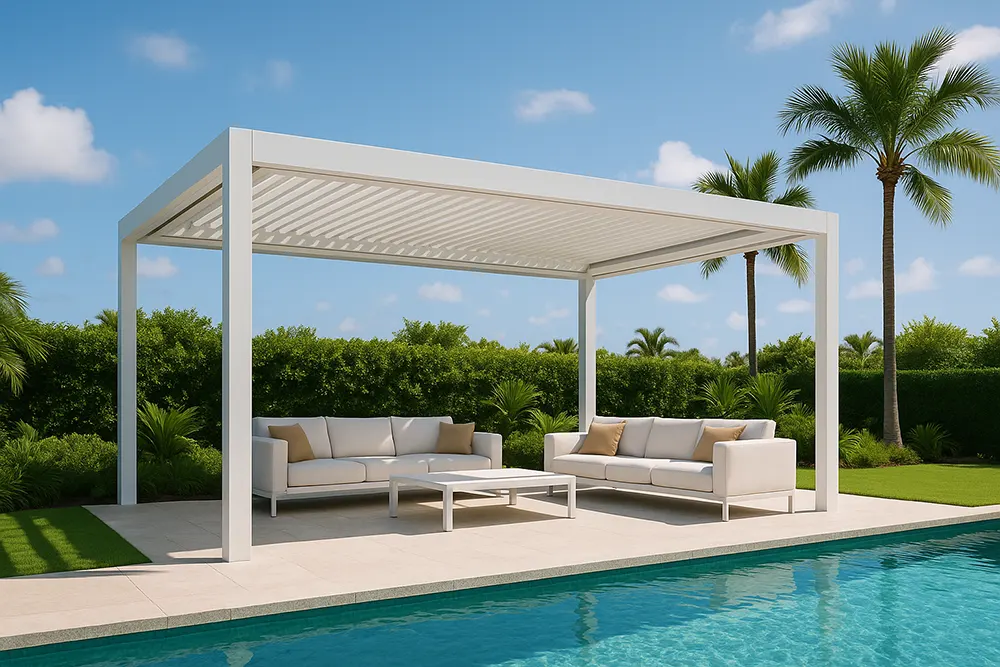
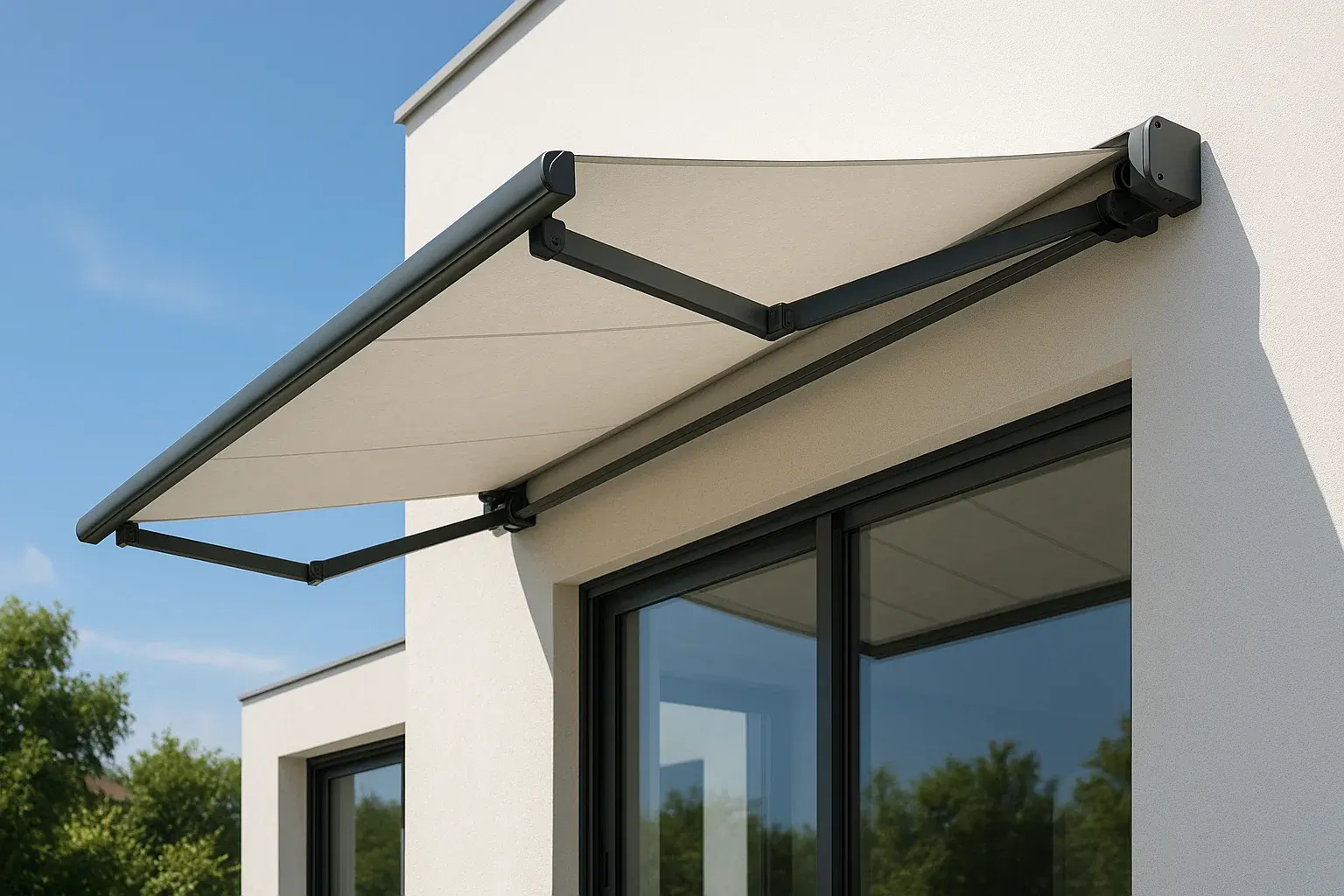
Modern folding roof systems fall into several distinct categories. Retractable pergolas feature horizontal louvered slats that rotate to control sunlight exposure. Sliding roof systems move horizontally or vertically on fixed tracks. Motorized awnings fold accordion-style to create dramatic visual transformations. Each type serves specific applications and carries distinct pricing implications that merit careful evaluation during the planning stage.
Importance of Understanding Pricing
Folding shed roofs represent substantial capital investments, typically ranging from ₹120 per square foot for basic polyester installations to ₹2,700 per square foot for advanced motorized systems with smart automation features. Without comprehensive pricing knowledge, property owners risk experiencing significant budget overruns, selecting inappropriate specifications for their use case, or investing in systems that fail to deliver intended performance outcomes.
Accurate pricing transparency serves multiple critical functions in the decision-making process. First, it enables realistic budgeting that prevents financial surprises during project execution. Second, it facilitates meaningful comparison between available options, ensuring maximum return on investment. Third, it helps identify whether budget constraints necessitate phased implementation or alternative design approaches. Understanding how prices correlate with material specifications, installation complexity, and feature sets empowers you to make strategic choices aligned with both immediate needs and long-term value objectives.
The Indian folding roof market exhibits substantial regional variation, with Kolkata and Tier-2 cities typically offering 20-30% cost advantages compared to metropolitan centers like Mumbai and Bangalore. This geographic pricing differential, combined with material quality variations and contractor expertise differences, creates a complex landscape where informed decision-making directly translates to thousands of rupees in savings
| Factor Category | Most Economical | Most Durable | Best Value |
|---|---|---|---|
| Frame Material | MS (₹50-80) | Aluminum (30-40 years) | GI (₹70-100) |
| Roofing | Polyester (₹130-165) | Metal Sheets (25-40 years) | PVC-Coated (7-10 years) |
| Location | Kolkata (₹25-40/sq ft labor) | All equal durability | Kolkata saves 40-60% vs Mumbai |
| Best Overall Value | Medium Projects (500-1,500 sq ft) with economies of scale and established pricing |
Read More about Roof Shed Building
Factors Affecting Folding Shed Roof Price in India
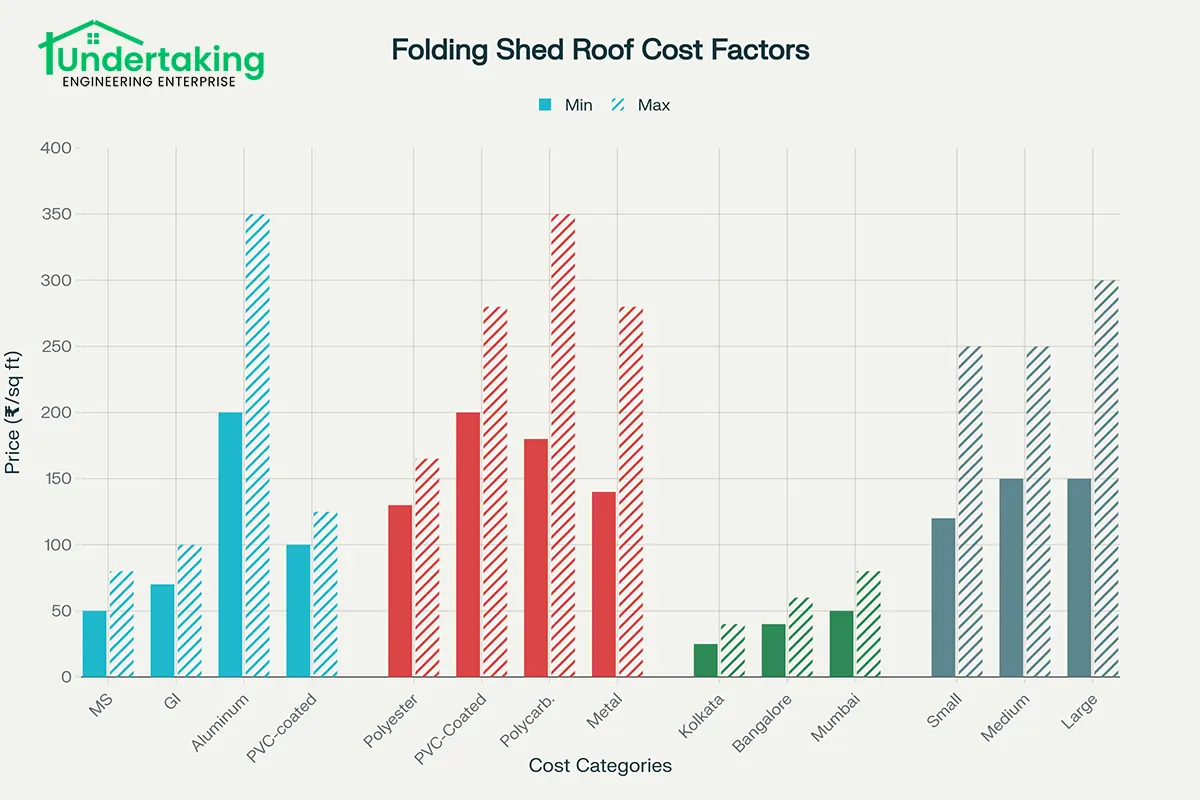
A professional grouped bar chart showing:
Price range comparisons across all major factors
Min-Max pricing visualization
Easy identification of cost variations
Regional labor cost differences
Material pricing hierarchy
1. Material Quality and Frame Selection
The frame structure represents the critical foundational component of any folding roof system, bearing loads from weather, fabric weight, and mechanical stress through countless opening and closing cycles. Material selection for frame construction fundamentally determines both initial cost and long-term durability characteristics.
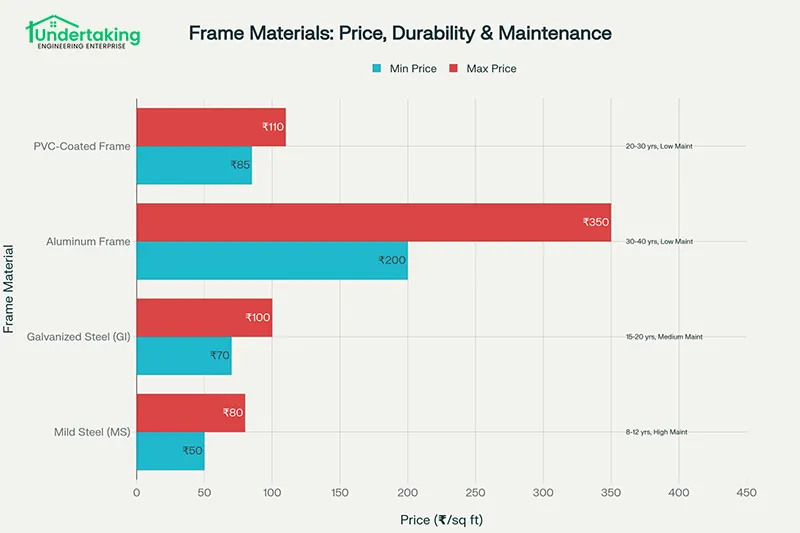
Mild Steel (MS) Frames offer the most economical option at ₹75-105 per kilogram, translating to approximately ₹50-80 per square foot for structural components. A typical 300-square-foot residential terrace shed would require approximately 400-500 kilograms of MS material, resulting in frame costs between ₹30,000-₹52,500. The primary advantage lies in lower material cost and ease of fabrication, allowing contractors to customize designs efficiently. However, mild steel requires protective coatings and regular maintenance to prevent rust formation, particularly in humid Indian climates. Without proper maintenance protocols, including annual repainting, MS frames typically deteriorate significantly within 8-12 years
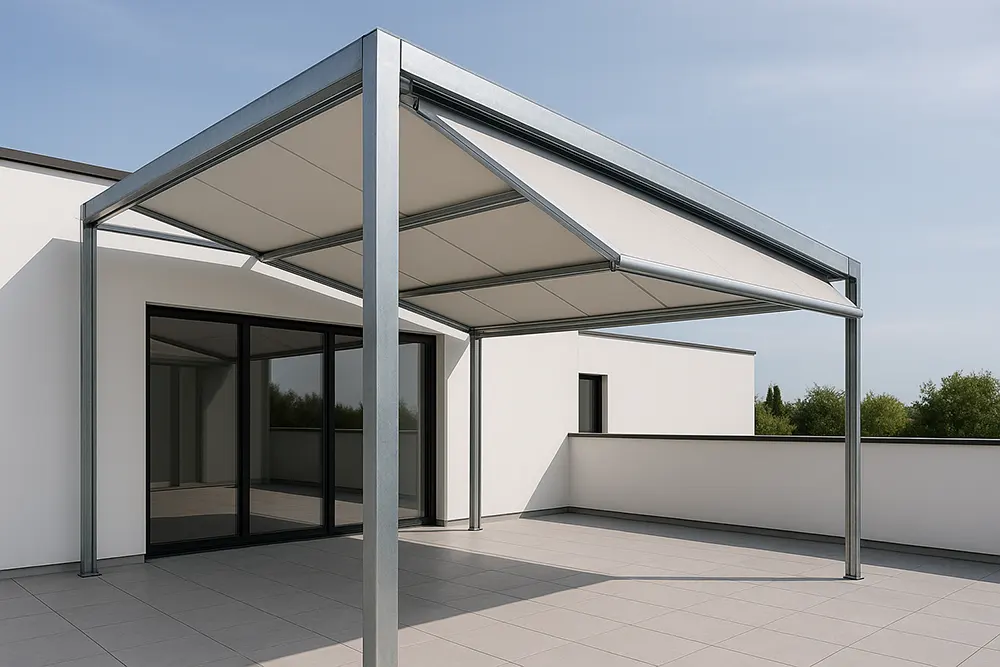
Galvanized Steel (GI) Frames provide superior corrosion resistance through hot-dip galvanizing processes that create protective zinc layers. Pricing ranges from ₹100-120 per kilogram, or ₹70-100 per square foot of coverage. This material choice adds approximately 30-40% to frame costs compared to MS but eliminates rust vulnerability for 15-20 years without maintenance. For regions with high humidity or salt spray exposure (coastal areas), galvanized steel becomes economically preferable despite higher initial investment. The extended service life and reduced maintenance requirements justify the premium for most commercial and industrial applications
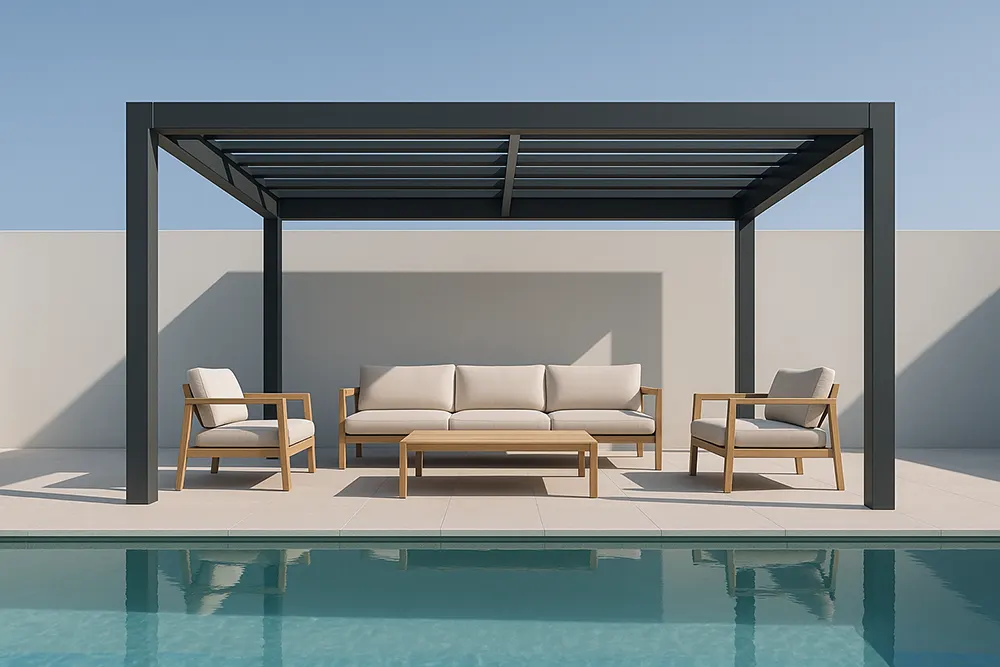
Aluminum Frame Systems represent premium positioning in the frame market at ₹300-500 per kilogram. Aluminum combines exceptional corrosion resistance with 40-60% weight reduction compared to steel equivalents. Lighter framing enables simpler installation procedures, reduced structural reinforcement requirements, and extended operational life reaching 30-40 years. Aluminum proves particularly advantageous for motorized systems where reduced weight decreases mechanical strain on motors and drive mechanisms. The premium pricing—typically 60-80% higher than galvanized steel—restricts aluminum selection primarily to high-end residential projects, commercial installations prioritizing aesthetic appeal, and applications where weight considerations create operational constraints
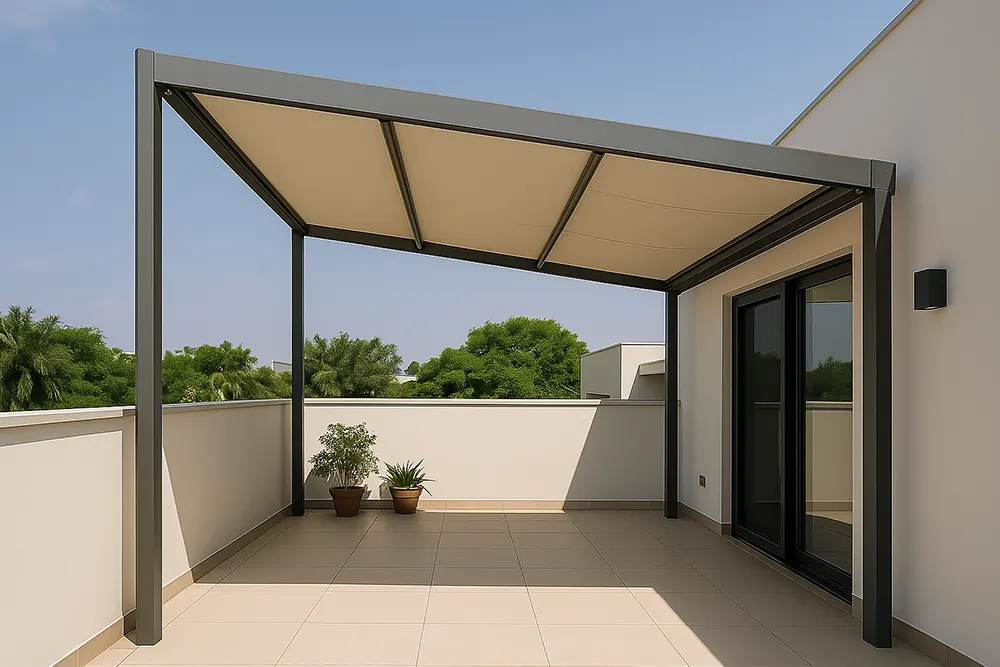
PVC-Coated Frames combine steel or aluminum substructure with durable polyvinyl chloride protective coatings in custom colors. These systems cost 15-25% more than bare metal equivalents but deliver integrated aesthetics, enhanced corrosion protection, and elimination of future painting requirements. PVC coating thickness typically ranges from 0.5-1.5 millimeters, with thicker applications providing superior longevity
2. Roofing Material Specifications & Performance
The roofing material—whether fabric, metal sheets, or polycarbonate panels—directly impacts weather protection capability, transparency, durability, maintenance requirements, and aesthetic contribution to the overall installation
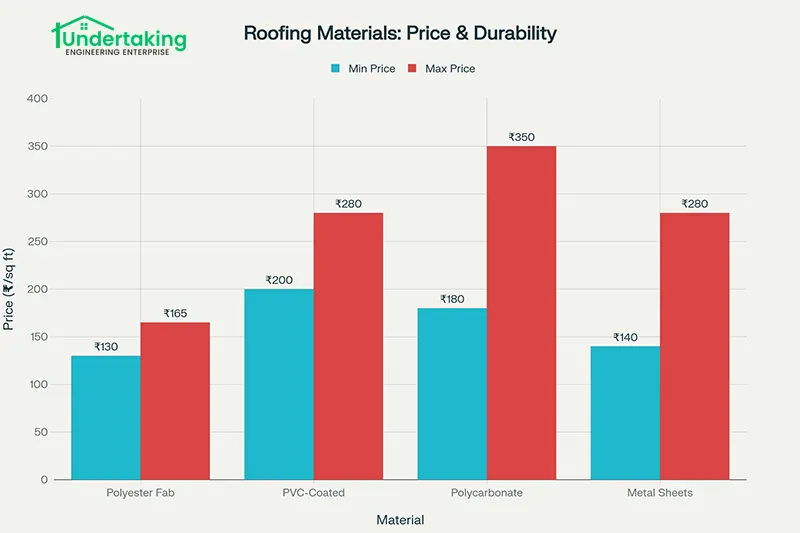
Polyester Fabric Systems represent the budget-conscious choice at ₹130-165 per square foot. These lightweight, synthetic materials offer basic weather protection suitable for temporary shade applications or interior covered spaces sheltered from direct weather exposure. Polyester resists fading and maintains flexibility across temperature ranges, but lacks waterproofing without specialized coatings. Typical lifespan extends 3-5 years before degradation necessitates replacement. A 500 square-foot installation costs ₹65,000-₹82,500 for material alone. These systems suit applications like shop display covers, temporary event structures, or rooftop sun screens, where weather protection requirements remain minimal
PVC-coated polyester fabric delivers enhanced performance at ₹200-280 per square foot. The PVC coating provides superior waterproofing, UV protection, and durability, extending the lifespan to 7-10 years. This material balances cost-effectiveness with meaningful weather protection, making it the most popular choice for residential and small commercial applications. The same 500-square-foot project costs ₹100,000-₹140,000 for materials. PVC-coated polyester resists mildew growth, cleans easily with mild soap solutions, and maintains a consistent appearance under India’s intense solar exposure.
Polycarbonate Sheets (transparent or translucent) cost ₹180-350 per square foot, depending on thickness (4-10 millimeters) and UV protection grade. These materials transmit 80-90% of natural light, creating bright covered spaces without artificial lighting requirements during daylight hours. Polycarbonate provides superior insulation compared to fabrics, reducing interior temperatures by 5-8°C in direct sunlight. Durability reaches 10-15 years with proper maintenance. A 500-square-foot installation costs ₹90,000-₹175,000 for material, positioning polycarbonate as a mid-to-premium option. Translucent properties make polycarbonate ideal for applications prioritizing natural light, such as garden pergolas, residential terrace spaces, and commercial greenhouse structures.
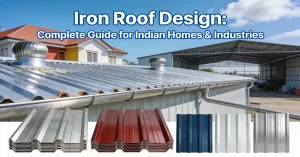
Metal Sheets (TATA, Jindal, other branded options) range from ₹140-180 per square foot for galvanized options to ₹200-280 per square foot for pre-painted variants. These materials deliver maximum durability and load-bearing capability, making them standard for industrial applications. Metal roofing withstands mechanical impact, supports snow loads in high-altitude regions, and maintains structural integrity for 25-40 years. Industrial farm sheds, warehouse structures, and heavy-use commercial facilities predominantly utilize metal roofing. The 500-square-foot example costs ₹70,000-₹140,000 for material, with superior longevity justifying the investment for permanent installations.
3. Size and Design Complexity Impact on Costs
Project scale fundamentally influences pricing through material quantity requirements, installation logistics, and design customization scope. Small residential installations (100-200 square feet) experience proportionally higher per-square-foot costs due to fixed overhead expenses distributed across a limited area. Medium commercial projects (500-1,500 square feet) benefit from economies of scale while remaining manageable for single-phase installation. Large industrial installations (5,000+ square feet) achieve optimal cost efficiency through streamlined processes and bulk material purchasing but require more sophisticated structural engineering and extended installation timelines.
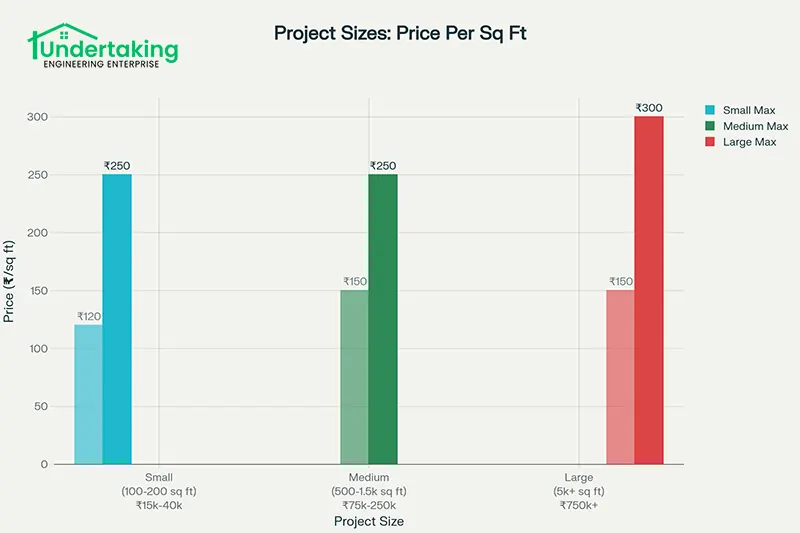
Small Residential Projects (100-200 sq ft): These typically cost ₹15,000-₹40,000 total (₹120-₹250 per square foot). A 150-square-foot balcony awning using standard PVC-coated fabric might cost approximately ₹25,000-₹35,000, including materials, fabrication, and installation. These projects suit manual operation, standardized designs, and straightforward mounting onto existing walls or support structures.
Medium Commercial Projects (500-1,500 sq ft): Pricing ranges from ₹75,000 to ₹2,50,000 total (₹150 to ₹250 per square foot). A 1,000-square-foot restaurant outdoor seating area with motorized control typically costs ₹1,50,000-₹2,25,000. These projects accommodate custom branding elements, integrated seating areas, and enhanced comfort features that command premium positioning.
Large Industrial Projects (5,000+ sq ft): Installation costs exceed ₹5,00,000 (₹150-₹300 per square foot). A 10,000-square-foot farm facility roof costs ₹15,00,000-₹30,00,000, incorporating durable metal construction, sophisticated drainage systems, and structural reinforcement for load-bearing requirements.
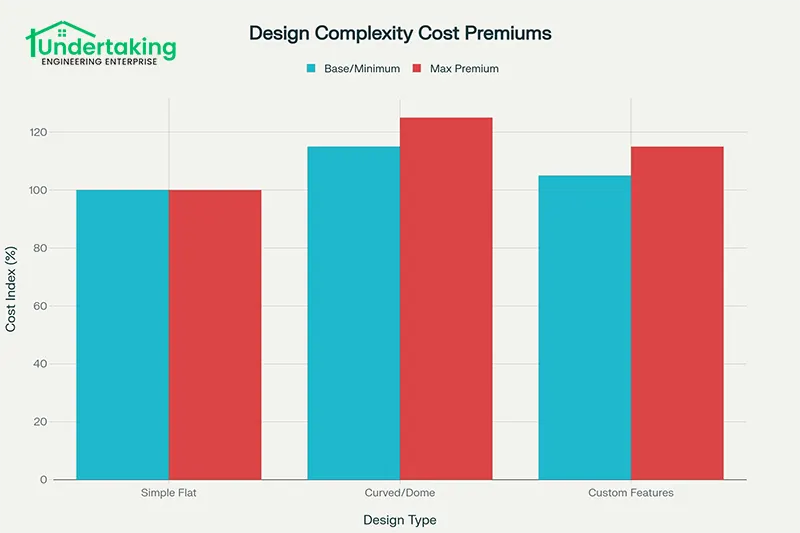
Design complexity multiplies base pricing through customization factors. Simple flat canopy designs follow standard fabrication procedures, establishing baseline pricing. Curved or dome configurations require specialized equipment and skilled labor, typically adding 15-25% to costs. Custom architectural features, including integrated lighting, motorized side screens, seating integration, or specialized drainage, each introduce 5-15% cost premiums reflecting additional engineering, fabrication, and installation requirements.
4. Installation Labor Costs and Regional Variations
Professional installation represents a significant cost component, typically ranging from ₹30-150 per square foot, depending on complexity and regional market factors.
Standard Installation Labor for straightforward projects averages ₹30-50 per square foot across most regions in India. This encompasses structural assessment, frame assembly, fabric or panel attachment, fastening, weatherproofing, and basic testing. A 500-square-foot residential installation requires approximately 5-7 labor days, typically completed within 1-2 weeks including material fabrication
Complex Structural Work, involving custom foundations, electrical integration for motorized systems, or structural reinforcement costs ₹100-150 per square foot. These installations require structural engineers, electricians, and specialized technicians, which can extend project timelines by 3-4 weeks.
Regional Labor Cost Variations reflect local market conditions and contractor availability. Kolkata and Tier-2 cities offer competitive labor rates of ₹25-40 per square foot, benefiting from established contractor networks with 10-20 years’ experience in shed construction. Metropolitan centers like Mumbai command a premium pricing of ₹50-80 per square foot due to higher cost-of-living and greater demand. Bangalore and Hyderabad typically fall between these extremes at ₹40-60 per square foot. This geographic variation means the same 1,000-square-foot project costs approximately ₹25,000 ₹40,000 in Kolkata versus ₹50,000 ₹80,000 in Mumbai for equivalent labor services.
Demolition and Site Preparation add ₹50-100 per square foot when replacing existing structures or addressing challenging site conditions. This might include removing old roofing, structural modifications, electrical rerouting, or drainage system installation. Budgeting ₹25,000-₹50,000 for site preparation prevents unexpected cost escalations during active construction.
Comparison with Rolling Shed Roof Prices
Overview of Rolling Shed Roof Systems
Rolling shed roofs represent an alternative technology utilizing tensile fabric structures supported by cable networks or motorized track systems. These systems feature single or multiple fabric panels suspended from structural frames that travel horizontally or on specialized roller systems. The mechanism differs fundamentally from folding roofs in operational approach, material efficiency, and aesthetic presentation
Rolling roofs excel in rapid deployment, transforming from fully open to completely covered in 30-90 seconds through motorized systems. The lightweight tensile fabric construction requires minimal structural support, reducing foundation and reinforcement requirements compared to heavier folding systems. Installation typically completes within 7-15 days, significantly faster than folding roof timelines of 10-30 days for comparable project scales.
The tensile fabric technology creates visually dramatic shade structures with contemporary aesthetic appeal. The fabric’s smooth, taut appearance conveys premium quality suitable for high-end restaurants, luxury residences, and corporate facilities. Rolling systems prove particularly effective for creating large-scale covered areas, commercial plazas, or parking structures, where folding mechanisms might prove mechanically complex or prohibitively expensive.
Pricing for rolling roof systems typically ranges from ₹150 to ₹400 per square foot, depending on motorization level, fabric quality, and structural complexity. A 1,000-square-foot commercial installation costs approximately ₹1,50,000-₹4,00,000, compared to ₹4,00,000-₹7,00,000 for equivalent folding roof systems with motorization.
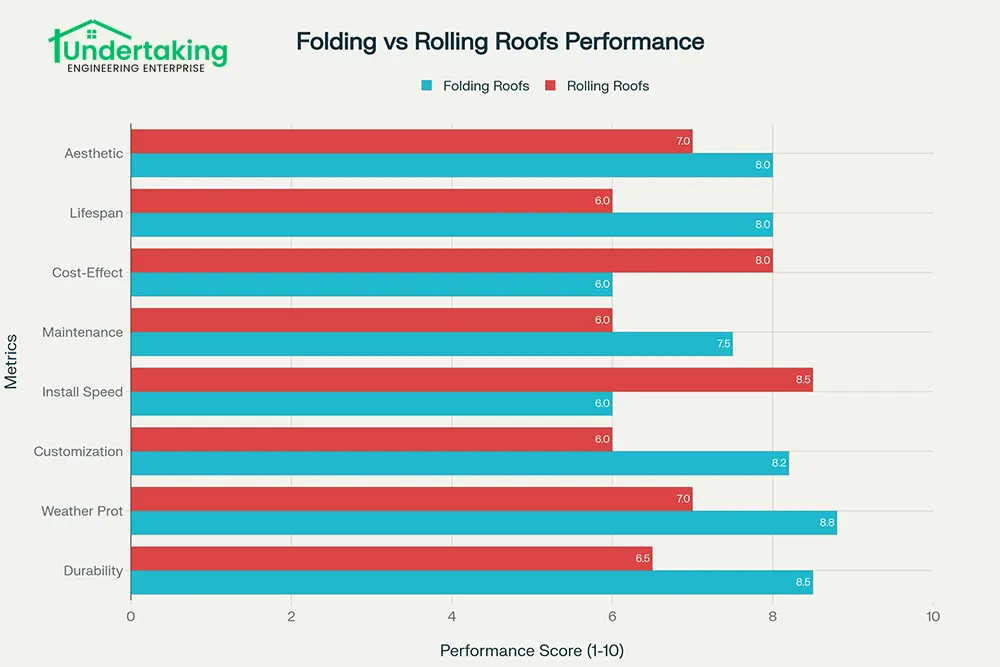
| Feature | Folding Roof | Rolling Roof |
|---|---|---|
| Price Range | ₹120-₹2,700/sq ft | ₹150-₹400/sq ft |
| Material Options | PVC, Polyester, Metal, Polycarbonate | Tensile fabric (primary), Metal frames |
| Lifespan | 15-40 years | 10-20 years |
| Maintenance Cost | Low to Medium (₹30-₹100/sq ft every 3-5 years) | Medium to High (₹50-₹150/sq ft every 2-3 years) |
| Installation Time | 10-30 days | 7-15 days |
| Customization Level | High | Medium |
| Motorization Cost | +₹500-₹1,500/sq ft | +₹300-₹800/sq ft |
| Weather Protection | Excellent | Good to Excellent |
| Design Flexibility | Very High | High |
| Structural Support Required | Moderate to High | Low to Moderate |
| Aesthetic Appeal | Professional | Contemporary Premium |
For a practical example, a 1,000-square-foot car parking installation shows pricing contrast:
Folding Roof Option: ₹4,25,000-₹6,75,000 (without motorization). Adding motorized controls increases the cost to ₹6,25,000-₹9,25,000.
Rolling Roof Option: ₹1,50,000-₹4,00,000 (without motorization). Motorization adds ₹3,00,000 to ₹8,00,000, resulting in a total of ₹4,50,000 to ₹12,00,000 depending on automation level.
The folding roof option delivers superior durability and lower operational costs, while rolling roofs provide faster deployment and aesthetic drama at lower base pricing.
Pros and Cons of Folding Versus Rolling Systems
✓ Folding Roof Advantages:
Folding systems deliver exceptional structural durability, often maintaining performance across 25-40 years without component replacement when properly maintained. The mechanical design distributes loads efficiently across multiple connection points, reducing stress concentration that leads to premature failure. Superior weather protection comes standard, with flush-fitted joints and comprehensive sealing preventing water intrusion even during heavy rainfall. Material diversity enables customization for virtually any aesthetic or functional requirement, from industrial metal structures to contemporary polycarbonate installations. Maintenance requirements remain modest compared to competing technologies, typically limited to annual inspections, hardware lubrication, and periodic fabric recoating for fabric-based systems.
✕ Folding Roof Disadvantages:
Higher initial investment reflects the sophisticated engineering and durable materials incorporated into these systems. A basic folding installation typically costs 40-60% more than equivalent rolling roof coverage. Installation timelines extend 10-30 days, depending on project complexity, potentially disrupting business operations or extending residential construction schedules. Manual operation becomes physically demanding for large installations, requiring motorization to achieve a user-friendly deployment, adding significant cost. Mechanical complexity introduces multiple potential failure points compared to simpler rolling systems, though failure rates remain acceptably low with quality contractors.
✓ Rolling Roof Advantages:
Rolling systems deliver rapid deployment, transforming outdoor spaces in seconds, appealing to hospitality venues requiring flexible configuration throughout operating hours. Lower initial cost enables budget-conscious projects or phased implementation across larger properties. Installation completes efficiently within 7-15 days, minimizing business disruption. Lighter-weight construction reduces foundation and structural reinforcement requirements, particularly valuable for retrofitting existing buildings. Contemporary aesthetic appeal creates a premium ambiance suitable for upscale commercial venues. Motorized systems operate smoothly with intuitive controls that customers perceive as sophisticated and modern.
✕ Rolling Roof Disadvantages:
Reduced lifespan (10-20 years) compared to folding systems necessitates earlier replacement investment. Ongoing maintenance requirements prove higher due to moving components, fabric degradation from UV exposure, and cable tension adjustments. The tensile fabric typically requires recoating or replacement every 5-7 years at a cost of ₹50-₹150 per square foot. Customization options remain more limited compared to folding systems’ material diversity and design flexibility. Weather protection capability, while excellent, may not match folding systems’ comprehensive sealing during extreme conditions. Noise from motorized operation can prove objectionable in noise-sensitive environments compared to silent folding mechanisms.
Choosing Roofing Contractor Services
Key Considerations for Contractor Selection
Verifying Experience & Proven Track Record:
Contractor experience directly correlates with project success, cost efficiency, and longevity of completed installations. When evaluating potential contractors, prioritize those with a minimum of 10 years of documented experience in shed fabrication and roofing installation. Request comprehensive portfolios documenting 20+ completed projects across residential, commercial, and industrial applications. Verify that contractors have specific expertise with your intended structure type—experience with car parking sheds differs meaningfully from farm facility roofing or restaurant terrace installations.
Examine project completion timelines, identifying any patterns of delays or overruns that might indicate management inefficiencies. Request direct contact information for previous clients who are willing to discuss their experience. Professional contractors encourage these reference checks. Visit at least two completed projects personally, assessing installation quality, weathertightness, and how structures have aged over time. Particularly valuable are projects completed 3-5 years prior, allowing evaluation of long-term material performance and maintenance requirements
Verifying Quality Standards and Certifications:
Inquire whether contractors use branded materials from established manufacturers, including TATA, Jindal, Nezon, or recognized international suppliers. Generic or unbranded materials often indicate cost-cutting that compromises durability. Request ISO certifications (ISO 9001 for quality management), structural engineering credentials from recognized institutes, and compliance documentation with relevant Indian Standards (IS codes). Ask specifically about adherence to IS 875 (Load Code for Buildings) and IS 1893 (Earthquake Resistance Standards), which apply to permanent structures.
Quality contractors provide written warranties typically spanning 5-10 years on structural components, with explicit coverage details for materials, workmanship, and performance guarantees. Verify warranty terms explicitly cover weathertightness, structural integrity, and motorized component function. Warranties should include provisions for emergency repairs and maintenance service accessibility.
Assessing Comprehensive Service Scope:
Optimal contractors provide end-to-end services, including initial site assessment, structural engineering evaluation, customized design development, fabrication using quality materials, professional installation, and post-completion support. Single-service providers (e.g., fabrication only or installation only) fragment responsibility and complicate issue resolution. Comprehensive service providers invest in ongoing relationships, prioritizing customer satisfaction that protects their reputation.
Verify that contractors conduct thorough site assessments evaluating soil conditions, structural load paths, wind exposure, and rainfall patterns affecting design specifications. These assessments should result in written reports with explicit recommendations and calculations justifying design choices. Contractors should provide detailed project timelines with milestone definitions, material delivery schedules, and contingency provisions for weather delays or unforeseen site conditions.
Regional Advantages in Kolkata and West Bengal:
Kolkata’s established shed construction industry delivers competitive advantages for property owners. Local contractors command 10-20 years of average experience with diverse applications from car
parking structures to farm facilities, developed through the region’s industrial infrastructure concentration. This expertise translates to efficient project execution, quality material sourcing through established vendor relationships, and realistic timeline estimation based on extensive historical data.
Kolkata’s competitive labor market produces 20-30% cost advantages compared to metropolitan centers without sacrificing quality. The city’s industrial heritage created specialized contractor networks, material suppliers, and skilled workers uniquely positioned for shed construction. Local presence ensures superior post-installation support with rapid emergency response if repairs become necessary. Undertaking Engineering Enterprise exemplifies this regional expertise, bringing 15+ years of hands-on experience in industrial, commercial, and residential shed fabrication to every project.
Critical Questions to Ask Potential Contractors
Prepare these specific questions during contractor evaluation conversations, recording responses for comparison:
1. How many folding/retractable shed roof projects have you completed in the past 5 years? Track the specific count and applications to assess relevant experience.
2. Can you provide references from clients with installations similar to mine? Request a minimum of three references with contact information, preferably projects completed 2+ years prior.
3. What branded materials do you use, and why have you selected these suppliers? Quality contractors justify material selections through durability, availability, and performance data rather than cost alone.
4. What is your exact warranty coverage, and what does it include and exclude? Insist on written warranty terms specifying duration, coverage scope, and claims procedures.
5. What is your standard project timeline from design to completion? Compare timelines across contractors, identifying outliers that might indicate either inefficiency or unrealistic promises.
6. Do you handle structural assessment and building permit requirements, or do I need separate professionals? Comprehensive contractors manage all compliance aspects.
7. What maintenance services do you provide post-installation? Ask about annual inspections, fabric recoating, motorization servicing, and emergency repair response times.
8. What contingencies exist if weather delays installation or site conditions prove more challenging than anticipated? Professional contractors have documented protocols for managing unforeseen circumstances.
9. Can you provide a detailed cost breakdown showing materials, labor, overhead, and profit margins? Transparent pricing enables comparison and reveals cost-cutting approaches.
10. What is your emergency repair response capability—how quickly can you address issues if they arise? Critical for installations where downtime creates significant inconvenience or business impact.
Innovative Roof Design Ideas for Modern Applications
Contemporary Aesthetic Trends in Shed Roofing
Smart Automation Integration Transforming User Experience:
Modern motorized folding roof systems incorporate sophisticated automation enabling remote operation through smartphones, tablet applications, or voice commands compatible with Amazon Alexa and Google Home ecosystems. Weather-responsive sensors automatically close roof systems when rain is detected, adjusting sensitivity thresholds to prevent nuisance activation during drizzle. Integration with existing smart home systems creates seamless environmental control alongside lighting, temperature, and security systems. These advanced features add ₹500-₹1,500 per square foot to base pricing but deliver convenience and property value enhancement that justify the investment for upscale residential and premium commercial applications.
Color Customization and Powder-Coated Finishes:
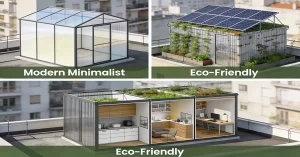
Matte black steel frames paired with white or cream-colored PVC fabric create contemporary minimalist aesthetics increasingly popular in modern residential design. Two-tone color schemes combining contrasting frame and fabric colors express personality while maintaining visual harmony with surrounding architecture. Professional powder-coating in custom colors enables perfect integration with existing property features. These aesthetic enhancements add 5-10% to frame costs but dramatically elevate perceived quality and property curb appeal.
LED Integrated Lighting Systems:
Embedded LED lighting within fabric panels or along structural frames extends usable hours into the evening, creating ambient illumination suitable for restaurants, residential entertaining, and commercial retail spaces. Low-voltage LED systems consume minimal power while delivering warm color temperatures (2700K-3000K) that enhance gathering space ambiance. Integrated dimming controls enable mood adjustment from subtle background lighting to vibrant entertaining illumination. LED integration costs approximately ₹50-₹150 per square foot, depending on light density and control sophistication.
Sustainable Design Approaches:
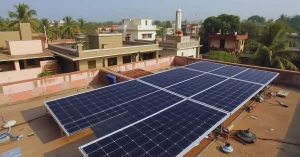
Solar panel integration into polycarbonate roof structures generates renewable electricity while maintaining transparent properties. Water harvesting systems, collecting rainfall from expanded roof areas, supplement property irrigation or water management needs. Insulated fabric or polycarbonate panels reduce cooling loads in air-conditioned facilities, lowering energy costs 10-15%. Eco-conscious material selection prioritizes recycled components and sustainably sourced materials. These sustainability features appeal to environmentally conscious property owners and enhance green building certification credentials.
Functional Designs for Specific Applications
Residential Applications Enhancing Property Value and Lifestyle:
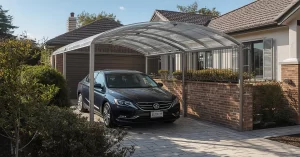
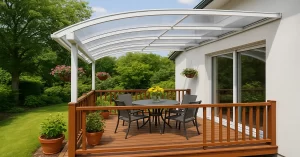
Terrace coverings (₹150-₹350 per square foot) transform outdoor spaces into true rooms, expanding functional living area and enabling year-round use despite India’s weather extremes. Retractable systems maintain design flexibility—fully open for clear night sky views, partially deployed for selective shading, or completely closed during monsoon seasons. Integrated ceiling fans and lighting create spaces as comfortable as interior rooms. Balcony shading systems (₹120-₹250 per square foot) protect furniture from UV damage while reducing interior solar heat gain. Car parking installations (₹150-₹300 per square foot) safeguard vehicles from hail damage, intense solar exposure, and rainfall while dramatically extending vehicle exterior durability.
Commercial Applications Supporting Business Operations:
Restaurant outdoor seating covers (₹200-₹400 per square foot) enable reliable weather protection, transforming outdoor dining from seasonal novelty to year-round revenue opportunity. The ability to close covers during unexpected rain or open them during pleasant weather maximizes customer comfort and operational flexibility. Shop awning systems (₹140-₹280 per square foot) create branded weather protection for customer entrances and merchandise displays, improving retail aesthetics while protecting shopfront windows. Office terrace installations (₹180-₹350 per square foot) provide employee break spaces with weather protection, enhancing workplace amenities that improve retention and satisfaction.
Industrial Applications Protecting Operations and Assets:
Loading dock protection (₹250-₹450 per square foot) safeguards equipment and materials from weather exposure during transfer operations, preventing water damage and protecting sensitive goods. Farm structures (₹140-₹280 per square foot) shelter livestock from extreme weather, improving animal health and productivity while protecting equipment from corrosion and degradation. Warehouse extensions (₹180 to ₹350 per square foot) provide covered storage, expanding facility capacity without expensive structural construction. Industrial applications prioritize durability over aesthetics, typically utilizing galvanized steel frames and metal roofing designed to withstand decades of demanding use.
Innovation Through Modular and Expandable Designs:
Modular systems enable phased expansion as budgets allow or property requirements evolve. Initial installations cover priority areas with provisions for future extensions onto additional sections. Adjustable louvre systems permit climate control through selective slat rotation, balancing shading with natural light and ventilation. Retractable side screens provide privacy, weather protection, or wind mitigation without permanent wall construction. Integrated seating, storage, or equipment within structural designs maximizes functionality within confined spaces. These innovations transform fixed structures into adaptive environments responding to evolving user needs.
Real-World Pricing Examples with Detailed Calculations
Example 1: Residential Terrace Installation (200 sq ft)
A Kolkata homeowner plans a 200-square-foot terrace covering for their residence, seeking weather protection for a lounge area with a dining table and comfortable seating.
Cost Breakdown:
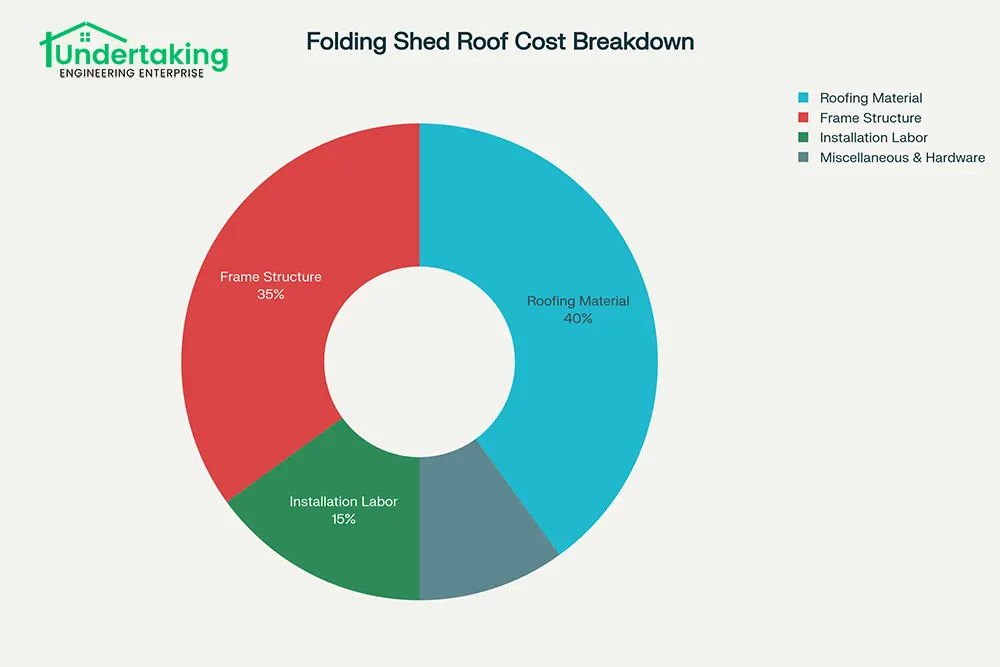
- Steel frame structure (MS): 200 sq ft × ₹35/sq ft = ₹7,000
- PVC-coated polyester fabric: 200 sq ft × ₹180/sq ft = ₹36,000
- Installation labor: 200 sq ft × ₹40/sq ft = ₹8,000
- Miscellaneous (fasteners, sealing, weatherproofing): ₹2,000
Total Project Cost: ₹53,000 (₹265/sq ft)
Timeline: 5-7 working days
Warranty: 5 years on structure, 7 years on fabric
Expected Lifespan: 12-15 years with basic maintenance
This modest investment transforms an unusable rooftop into a comfortable outdoor living space, immediately increasing property value and enabling year-round outdoor entertaining regardless of weather conditions
Example 2: Commercial Car Parking Installation (1,000 sq ft)
A Kolkata car dealer requires covered parking for 15-20 vehicles, seeking weather protection and enhanced customer experience. The 1,000-square-foot installation incorporates a motorized retractable capability.
Cost Breakdown:
- Aluminum frame with motorization: 1,000 sq ft × ₹150/sq ft = ₹1,50,000
- Polycarbonate roofing (8mm): 1,000 sq ft × ₹200/sq ft = ₹2,00,000
- Professional installation labor: 1,000 sq ft × ₹75/sq ft = ₹75,000
- Electrical work for motorization: ₹25,000
- Miscellaneous (drainage, guttering, fasteners): ₹25,000
Total Project Cost: ₹4,75,000 (₹475/sq ft)
Timeline: 15-20 working days
Warranty: 10 years structural, 5 years motorization
Expected Lifespan: 20-25 years; motorized components may require replacement at 12-15 years
This investment protects customer vehicles, eliminates weather-related concerns discouraging parking lot use, and creates premium customer experience, positioning the dealership favorably against competitors
Example 3: Industrial Farm Shed Installation (2,000 sq ft)
A West Bengal dairy farm requires a covered facility for livestock shelter and feed storage, demanding maximum durability and easy maintenance for animal health and equipment protection.
Cost Breakdown:
- GI pipe structure (engineered design): 2,000 sq ft × ₹80/sq ft = ₹1,60,000
- Pre-painted galvanized metal sheets: 2,000 sq ft × ₹160/sq ft = ₹3,20,000
- Professional installation labor: 2,000 sq ft × ₹50/sq ft = ₹1,00,000
- Foundation reinforcement and drainage: ₹40,000
- Miscellaneous (guttering, fasteners, ventilation): ₹30,000
Total Project Cost: ₹6,50,000 (₹325/sq ft)
Timeline: 20-25 working days
Warranty: 10 years of structural integrity
Expected Lifespan: 30-40 years with annual maintenance
This robust installation protects farm assets, improves animal welfare through weather protection, preserves equipment, prevents corrosion, and establishes productive infrastructure supporting business growth and profitability
Regional Pricing Variations: Impact on Project Economics
The identical 1,000-square-foot motorized car parking installation costs vary significantly across Indian metros:
- Kolkata/Tier-2 Cities: ₹4,25,000-₹4,75,000 (₹425-475/sq ft)
- Bangalore/Hyderabad: ₹4,75,000-₹5,50,000 (₹475-550/sq ft)
- Mumbai/Delhi: ₹5,75,000-₹6,75,000 (₹575-675/sq ft)
A business owner in Mumbai pays a 40-60% premium for the identical installation compared to Kolkata, a differential of ₹1,50,000-₹2,00,000 on this single project. This geographic arbitrage creates opportunities for property owners in Tier-2 cities to access superior quality without metropolitan pricing premiums.
Maintenance and Long-Term Cost Considerations
Regular Maintenance Requirements and Costs
Annual Maintenance Schedule:
Professional annual inspections identify potential issues before they escalate into expensive repairs. Annual cost: ₹500-₹2,000 depending on structure size & complexity. Inspections should assess:
- Structural integrity and connection tightness
- Fabric condition and waterproofing effectiveness
- Motorized component function and smooth operation
- Drainage system patency and water flow
- Fastener corrosion or loosening
Fabric Recoating and Waterproofing (Every 3-5 Years):
PVC-coated fabrics gradually lose water-shedding properties through UV degradation and environmental exposure. Professional recoating restores waterproofing effectiveness, extending fabric lifespan 5-7 additional years. Cost: ₹30-₹50 per square foot. A 500-square-foot installation costs ₹15,000-₹25,000 for recoating, typically budgeted for years 4, 8, and 12 of structure ownership. This preventive maintenance proves far more economical than replacing entire fabric sections.
Hardware Maintenance:
Motorized systems require annual lubrication and electrical component inspection to maintain smooth operation and prevent failures. Professional servicing costs ₹2,000-₹5,000 annually. Non-motorized structures require periodic fastener tightening as temperature fluctuations and wind loads gradually loosen connections. Basic maintenance costs ₹500-₹1,500 annually.
Gutter and Drainage Maintenance:
Regular clearing of leaves, debris, and silt prevents water backup and structural damage. Quarterly cleaning costs ₹300-₹800, depending on structure size and surrounding vegetation. Neglected drainage systems create water pooling that deteriorates fabric and rusts metal components, resulting in repairs costing 10-15 times the preventive maintenance investment.
Lifespan Analysis and Durability Expectations
PVC-Coated Fabric Structures:
15-20 years baseline lifespan, extendable to 25-30 years through disciplined maintenance. After 15 years, significant recoating, fabric replacement, or structural reinforcement typically becomes necessary. Material degradation accelerates in high-altitude regions with intense UV exposure and coastal areas with salt spray exposure.
Metal-Frame Structures:
25-40 years, depending on frame material (MS vs. GI vs. Aluminum) and environmental conditions. Galvanized steel provides 20-30 years without major component replacement under normal conditions. Motorized components typically require replacement every 12 15 years, costing ₹100,000-₹300,000 depending on system complexity.
Polycarbonate Panel Systems:
10-15 years for standard polycarbonate, extending to 15-20 years for UV-protected premium grades. Polycarbonate becomes brittle and yellows with age, reducing light transmission and aesthetic appeal. Material replacement every 12-15 years represents the typical major maintenance cycle.
Long-Term Value Calculations
Cost-Benefit Analysis Framework:
Calculate true ownership cost by summing the initial installation investment plus predicted maintenance costs across the ownership period. Compare this total-cost-of-ownership against alternative solutions:
- Traditional permanent masonry construction (fixed investment, decades of durability, zero flexibility)
- Periodic replacement of temporary structures (lower initial cost, frequent replacement, disruption, and learning curve)
- Do-nothing approach (no financial investment, lost productivity and comfort, deteriorated quality of life)
For many property owners, the superior functionality and moderate ongoing costs of quality folding roof systems deliver optimal long-term value compared to alternatives.
Property Value Enhancement:
Quality shade structures typically increase property valuation 5-8% through expansion of functional living space, improved property aesthetics, and expanded entertainment capability. A ₹50 lakh residential property gains ₹2.5-₹4 lakh valuation from a ₹50,000 terrace covering installation. Buyers recognize quality installations as prestigious amenities commanding price premiums. Commercial properties benefit similarly through expanded revenue-generating space and enhanced customer experience.
Making Your Investment Decision
Synthesizing Key Decision Factors
Understanding folding shed roof pricing requires synthesizing multiple variables, including material specifications, installation complexity, geographic market factors, and long-term ownership costs. Basic systems at ₹120-₹150 per square foot address budget-conscious needs for temporary shade, while premium motorized installations at ₹1,500-₹2,700 per square foot deliver sophisticated automation and extended durability. Most property owners find optimal value in mid-range systems at ₹180-₹350 per square foot, balancing comprehensive protection with reasonable investment.
Geographic location significantly influences pricing—Kolkata and Tier-2 cities deliver 20-30% cost advantages compared to metropolitan centers without quality compromises. The region’s established contractor networks and competitive markets enable superior value for property owners able to access local expertise. Regional pricing variations represent one of the most significant leverage points for achieving project economics.
Contractor selection fundamentally determines project success. Prioritizing experienced professionals with verified track records, quality material commitments, and comprehensive service offerings prevents costly mistakes. Engaging contractors who understand your specific needs—whether residential terrace enhancement, commercial business support, or industrial facility protection-ensures design optimization for intended use.
Action Steps for Project Implementation
Phase 1: Assessment and Planning (2-3 weeks)
Begin by clarifying your specific requirements: space dimensions, intended use, aesthetic preferences, weather protection needs, and budget constraints. Research 3-5 experienced contractors in your region, requesting detailed proposals specifying materials, timelines, warranties, and maintenance recommendations. Visit contractor-completed projects similar to your envisioned installation, assessing quality and durability. Establish realistic budgets incorporating not only installation costs but also 15-year maintenance projections.
Phase 2: Detailed Design and Quotation (1-2 weeks)
Engage your preferred contractor for a comprehensive site assessment, including structural evaluation, wind load analysis, drainage requirements, and electrical needs if motorization is desired. Request detailed design renderings showing how the proposed structure integrates with existing architecture. Obtain written quotations with explicit cost breakdowns, material specifications, timeline estimates, and warranty terms. Request clarification on anything unclear before proceeding.
Phase 3: Installation and Commissioning (10-30 days depending on size)
Confirm project start date, material delivery schedules, and contingency protocols for weather delays. Maintain regular communication with the contractor regarding progress, material quality, and any changes. Conduct final inspection confirming installation meets specifications, motorization functions smoothly, and waterproofing is complete. Document project completion with photos for warranty and future reference purposes.
Phase 4: Ongoing Maintenance and Optimization (Years 1-15)
Establish an annual maintenance schedule with your contractor, scheduling inspections and servicing during appropriate seasons. Track maintenance costs and performance, enabling informed decisions regarding recoating, component replacement, or future modifications. Gather feedback on how well the installation meets your needs, identifying opportunities for enhancement or expansion.
Investment in Quality Creates Lasting Value
Folding shed roof installations represent investments in lifestyle enhancement, property value creation, and long-term utility. Selecting quality materials, experienced contractors, and appropriate specifications ensures these benefits compound across decades of use. While comprehensive motorized systems require substantial initial investment, the functionality, convenience, and property value enhancement justify the expenditure for most applications.
Property owners throughout Kolkata and West Bengal recognize that professional shed roof installations provide superior alternatives to improvised solutions or temporary structures that require frequent replacement. Quality installations create functional outdoor spaces supporting business operations, expanding residential entertaining capability, protecting valuable assets, and expressing the property owner’s commitment to quality and aesthetic appeal.
Get a customized quote for your folding shed roof project today. Contact experienced contractors who understand Indian climate conditions and provide comprehensive end-to-end solutions. With over 15 years of expertise, Undertaking Engineering Enterprise delivers durable structures combining functionality with aesthetic appeal across industrial, commercial, and residential applications. Whether you require car parking protection, farm facility enhancement, commercial roofing solutions, or residential terrace extension, professional contractors deliver precisely engineered installations ensuring optimal performance and longevity. Your investment in quality roofing protects not just physical assets but also creates spaces where life unfolds more comfortably, productively, and enjoyably