
Discover how iron roof design offers durability, cost-effectiveness, and excellent weather protection for Indian properties. Learn about steel roof design, tin roof design, and installation best practices.
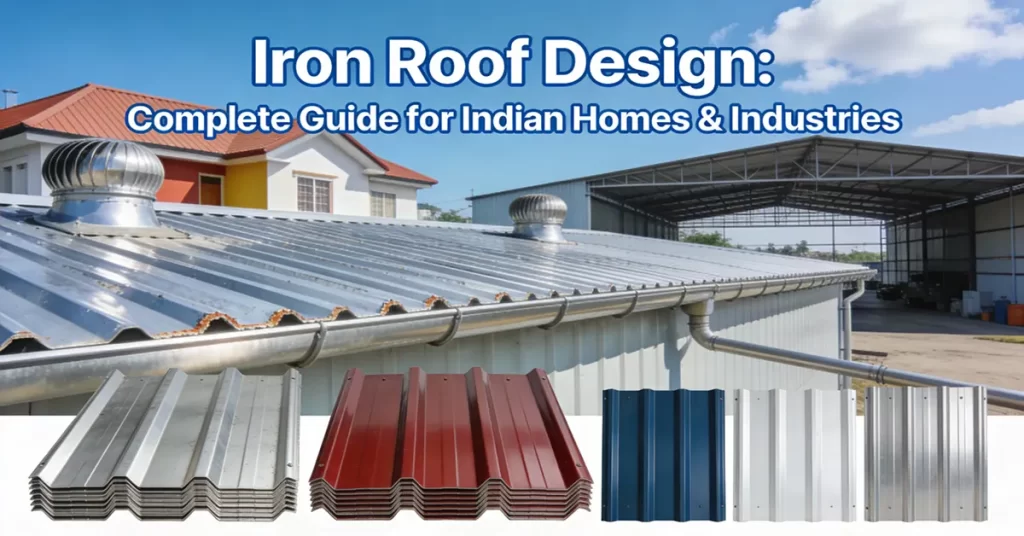
A Complete Guide for Indian Homes and Industries
Iron roof design refers to the structural planning and material selection for roofs made primarily from galvanized iron or color-coated steel sheets. These designs incorporate proper slopes, ventilation systems, and anchoring mechanisms to ensure water drainage and structural stability.
Steel roof design is the engineering aspect of creating strong, durable roofing systems. It involves calculating load capacity, planning expansion joints, and designing drainage patterns. A good steel roof design ensures your roof withstands wind pressure, heavy rainfall, and temperature variations common across India.
Tin roof design typically refers to roofing using tin-coated or galvanized sheets. The term “tin” is often used colloquially in India for metal roofing, though modern roofs use galvanized iron, color-coated steel, or galvalume materials rather than pure tin.
Types of Iron Roof Designs
1. Corrugated Metal Roofing
This is the most common and affordable shed roof design. The corrugated pattern provides structural strength while allowing water to run off quickly. Available in galvanized iron (GI), color-coated steel, and galvalume finishes.
Best for: Industrial sheds, warehouses, agricultural structures, and budget-conscious residential projects.
Lifespan: 15-20 years for GI, 20-25 years for color-coated, 35-40 years for Galvalume.
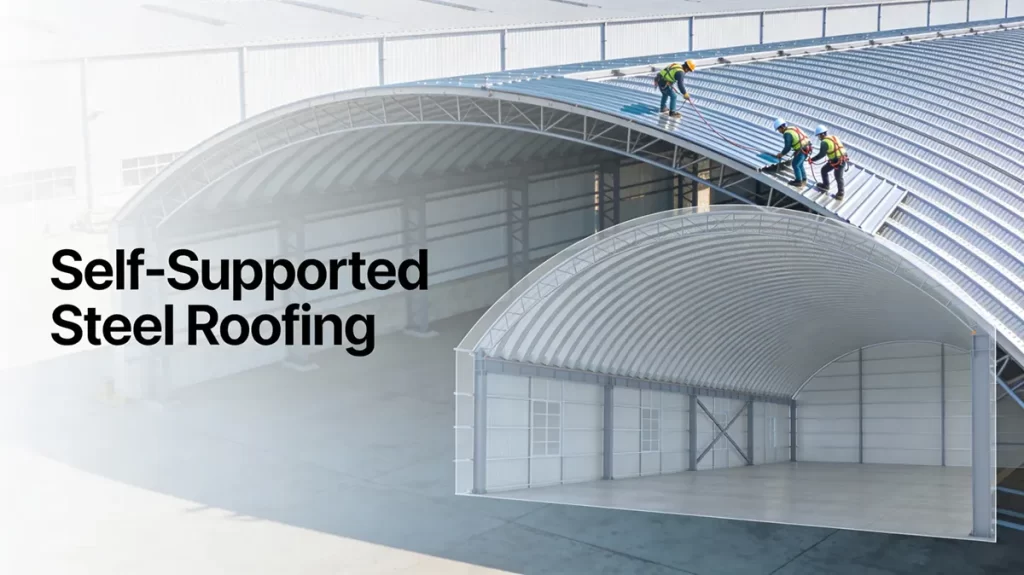
2. Self-Supported Steel Roofing
This modern iron roof design features curved steel panels that don’t require internal support columns. The curved shape provides strength through its form rather than thickness.
Advantages:
Maximizes internal floor space
Faster installation
Can cover 10,000+ square feet in one day
100% leak-proof
No bolts or fasteners exposed
Best for: Large factories, warehouses, railway stations, and commercial complexes.
3. Cantilever Roofing
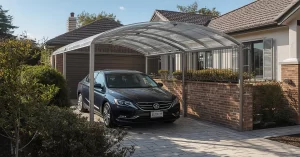
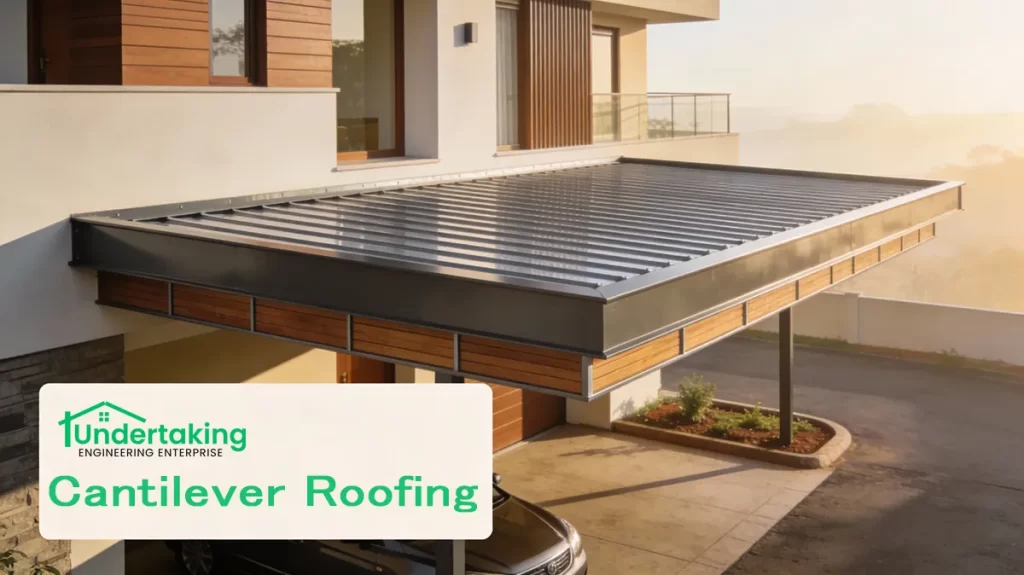
Popular for parking sheds and platform coverings. This design uses steel columns on one side to support the roof without central pillars.
Advantages:
Unobstructed space below
Modern appearance
Perfect for vehicles and goods
Best for: Car parking sheds, loading platforms, and building entrances.
4. Composite and Insulated Metal Roofing
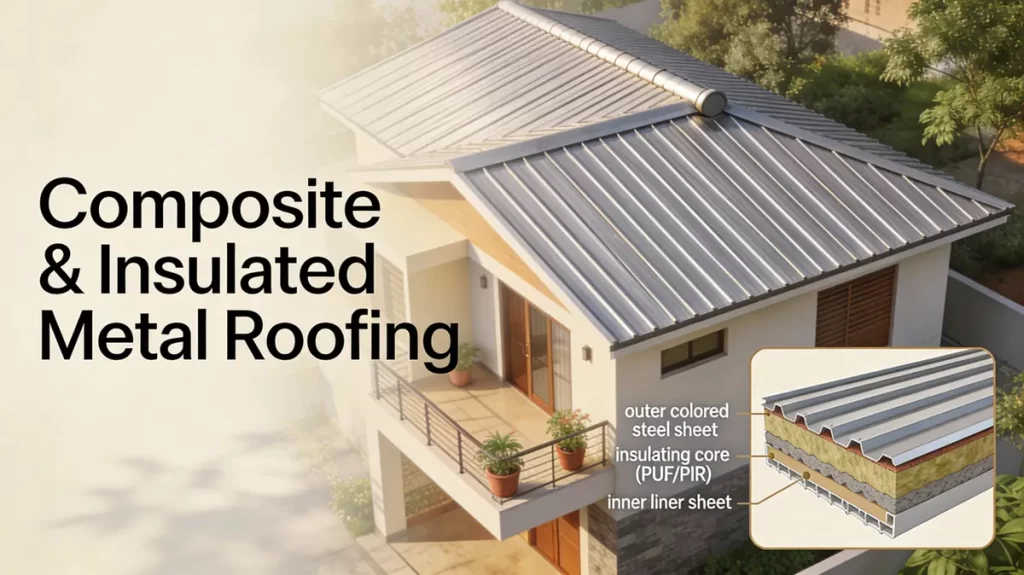
Modern steel roof design includes insulated panels combining metal, foam insulation, and inner linings in a single unit.
Advantages:
Better thermal insulation
Reduces cooling costs significantly
Soundproofing properties
Higher initial cost but better long-term value
Best for: Office buildings, cold storage facilities, and residential homes requiring temperature control.
Why Choose Iron Roof Design for Indian Properties?
Durability Against India's Climate
India’s diverse climate presents unique roofing challenges. From the scorching temperatures of Rajasthan to the monsoon fury of Kerala, iron roofs have proven their mettle. Modern home roof design with iron roofing combines engineering excellence with practical durability, making it a smart investment for any property owner.”
Heat Resistance: Iron roofs reflect solar heat effectively, reducing internal temperatures and cooling costs. Studies show heat reflectivity can reduce energy consumption by 20-40%.
Water Resistance: Properly designed iron roofs shed water quickly. The slope and profile design ensure no water accumulation, preventing leaks and water-related damage.
Corrosion Protection: Modern iron roofing uses galvanization or color coatings that provide protection against rust and pollution. Galvalume finishes last 35-40 years in harsh conditions.
Cost-Effectiveness
Iron roof design offers excellent value for money:
Initial Cost: ₹170-₹200 per square foot (including structure and installation)
Long-term Savings: Minimal maintenance required, no repainting needed for 20+ years
Lifespan: 15-40 years, depending on material quality and maintenance
A 1,000 square foot iron roof costs approximately ₹17,000-₹20,000 initially but lasts decades with minimal investment.
Low Maintenance Requirements
Unlike tile roofs that require frequent repairs or concrete roofs that crack in heat, iron roofs need minimal upkeep:
Annual or biannual cleaning
Occasional inspection of fasteners
No painting required for color-coated or galvalume options
Drainage system checks before the monsoon
Environmental Benefits
Iron roofing is highly sustainable:
100% recyclable material
Made from recycled steel content
Reduces the heat island effect in urban areas
No toxic emissions during manufacture or installation
Lightweight Design
Iron roofs are much lighter than traditional tile or concrete roofing. This means:
No need for heavy structural support systems
Easier installation on existing structures
Reduced load on foundations
Better for retrofitting projects
Components of Good Iron Roof Design
1. Proper Slope and Pitch
Water drainage depends entirely on the roof slope. Minimum recommended slopes:
Flat roofs: Minimum 1:20 (5% slope)
Pitched roofs: 1:4 to 1:3 (25-33% slope)
A proper slope prevents water pooling and ensures quick drainage during heavy rainfall.
2. Ventilation Systems
A good iron roof design includes ventilation to prevent heat buildup:
Ridge ventilators for natural air circulation
Soffit vents for air intake
Turbo ventilators for active heat removal
Louvers for controlled air movement
3. Expansion Joints
Iron expands with heat and contracts in cold. Quality designs include expansion joints every 20-30 feet to accommodate this movement without causing stress.
4. Fastening Systems
Modern iron roof design uses stainless steel fasteners and sealing systems to prevent:
Fastener loosening due to thermal expansion
Water seepage around attachment points
Rust in attachment areas
5. Drainage Systems
Complete drainage design includes:
Gutters and downpipes sized for rainfall intensity
Proper grading to direct water away from structures
Screens to prevent leaf and debris blockage
Maintenance access points
Iron Roof Design for Different Applications
Residential Iron Roof Design
Home applications include main roof covering for the entire house, terrace roofs for open space protection, home car parking sheds for vehicles, and balcony covers for weather protection.
Main roof covering for the entire house
Terrace roofs for open space protection
Car parking sheds for vehicles
Balcony covers for weather protection
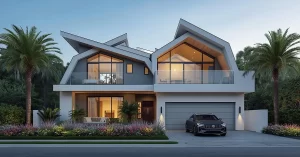
Residential iron roof design typically uses color-coated steel for aesthetic appeal combined with durability.
Considerations:
Color options to match home design
Quieter alternatives to minimize rain noise
Proper insulation to reduce cooling costs
Safety railings for accessible roofs
Commercial and Industrial Iron Roof Design
Industrial applications require heavy-duty specifications:
Warehouse roofing covering large spans
Factory sheds for manufacturing facilities
Cold storage facilities with insulation
Parking complexes for vehicles and equipment
Industrial steel roof design focuses on:
Maximum span coverage with minimal support
Heavy load-bearing capacity
Fire resistance properties
24/7 operational reliability
Agricultural Iron Roof Design
Farm structures benefit from specialized iron roofing:
Dairy shed roofs with ventilation for animal comfort
Grain storage requiring weather-tight coverage
Poultry farm roofs with controlled ventilation
Equipment storage sheds
Agricultural roofs need:
Superior ventilation for livestock health
Easy drainage for wet environments
Durability against animal activity
Weather protection for stored crops
Cost Analysis: Iron Roof Design in India
Iron roof design offers excellent value for money with construction costs of ₹170-₹200 per square foot.
Material Costs (Per Square Foot)
| Material Type | Cost | Lifespan | Best Use |
|---|---|---|---|
| GI (Galvanized Iron) | ₹50-₹70 | 15-20 years | Budget projects |
| Color-Coated Steel | ₹80-₹120 | 20-25 years | Residential & commercial |
| Galvalume Steel | ₹120-₹150 | 35-40 years | Premium/coastal areas |
| Insulated Panels | ₹100-₹160 | 25-30 years | Temperature-controlled spaces |
Installation Costs
Labor: ₹20-₹40 per square foot
Structure (MS/Steel frame): ₹50-₹100 per square foot
Fasteners & accessories: ₹10-₹20 per square foot
Complete Project Costs
For a 1,000 square foot iron roof:
Basic GI system: ₹1,70,000-₹2,00,000
Color-coated system: ₹2,00,000-₹2,50,000
Galvalume system: ₹2,50,000-₹3,20,000
Insulated system: ₹2,80,000-₹3,50,000
For a 5,000 square foot industrial shed:
Self-supported steel: ₹8,50,000-₹10,00,000
Conventional framed: ₹10,00,000-₹12,00,000
Installation Process for Iron Roof Design
Step 1: Site Preparation
Clear and level the installation area
Install the foundation and support structure
Ensure proper drainage around the building
Check for any obstructions
Step 2: Structure Fabrication
In-workshop fabrication of all steel components:
Cut and shape all framing members
Perform quality welding and inspections
Apply anti-corrosion coating to all joints
Bundle components for transport
Step 3: On-Site Assembly
Install main columns and primary frames
Attach secondary framing members
Ensure all joints are tight and secure
Verify vertical alignment
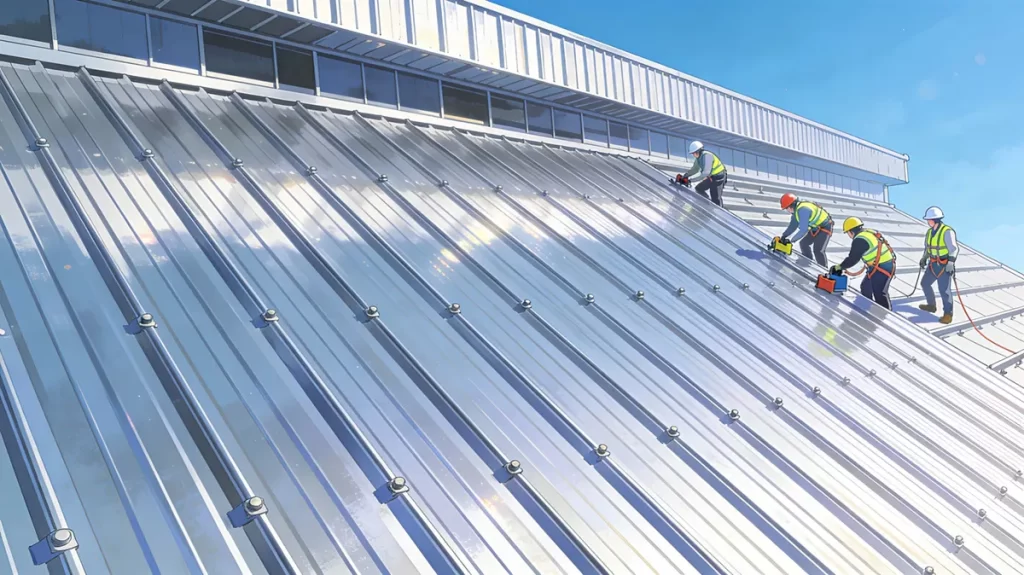
Step 4: Roofing Installation
Install roofing sheets from the eave to the ridge
Ensure proper overlap of sheets
Secure with stainless steel fasteners
Apply sealant at all connection points
Step 5: Finishing Work
Install gutters and downpipes
Add ventilation systems
Install any specialized accessories
Perform final waterproofing check
Step 6: Quality Testing
Water spray test for leak detection
Inspection of all fasteners
Verification of proper drainage
Safety inspection of the structure
Maintenance Guidelines for Iron Roofs in Indian Climate
Monsoon Preparation
Before monsoon season:
Clear all gutters and downpipes
Remove leaves and debris
Check for any existing damage
Inspect flashing and sealants
Trim overhanging tree branches
Regular Cleaning
Wash the roof twice yearly with clean water
Use gentle flow, avoid high-pressure jets
Remove accumulated dust and soot
For coastal areas, clean every 3-4 months
Seasonal Inspections
Before Summer:
Check expansion joints
Inspect fasteners for tightness
Look for any rust or damage
Before Winter:
Ensure proper drainage
Check insulation condition
Inspect thermal expansion areas
After Heavy Rain:
Look for leaks or water stains
Check the drainage system function
Inspect fastener tightness
What NOT to Do
Don’t use acid or bleach-based cleaners
Avoid high-pressure water jets
Don’t paint galvanized or color-coated surfaces unnecessarily
Never apply a heavy coating over self-healing patinas
Comparison: Iron vs. Other Roofing Materials
| Feature | Iron Roof | Tile Roof | Concrete Roof | Asphalt Shingles |
|---|---|---|---|---|
| Lifespan | 20-40 years | 30-50 years | 20-30 years | 15-20 years |
| Cost | ₹170-₹200/sqft | ₹250-₹350/sqft | ₹200-₹300/sqft | ₹100-₹150/sqft |
| Maintenance | Very low | Moderate | High | High |
| Weight | Light | Very heavy | Very heavy | Light |
| Weather Resistance | Excellent | Good | Poor | Fair |
| Installation Time | Fast (7-14 days) | Slow (30+ days) | Slow (30+ days) | Moderate (14-20 days) |
| Heat Reflection | Excellent | Good | Poor | Fair |
| Noise Level | Higher | Low | Low | Low |
| Environmental Impact | Recyclable | Non-recyclable | Non-recyclable | Non-recyclable |
Common Misconceptions About Iron Roof Design
"Iron roofs are too noisy in rain"
Reality: While bare metal can amplify rain sound, proper insulation, underlayment, and interior linings significantly reduce noise. Many modern designs are as quiet as traditional roofs.
"Iron rusts quickly in India"
Reality: Modern galvanized and color-coated iron provides 20-40 years of rust protection. Galvalume extends life to 35-40 years. Rust is not a concern with quality materials.
"Iron roofs are expensive"
Reality: Iron roofing costs 30-40% less than tile roofing and lasts 2-3 times longer, making it one of the most cost-effective options when considering lifespan.
"Iron roofs won't withstand heavy winds"
Reality: Properly designed and installed iron roofs resist wind speeds up to 150+ km/h. Installation quality matters more than material choice.
"Iron roofs are only for industrial buildings"
Reality: Modern iron roof design is architecturally versatile. Color options, textures, and designs make them suitable for residential homes, offices, and commercial spaces.
Future Trends in Iron Roof Design
1. Solar Integration
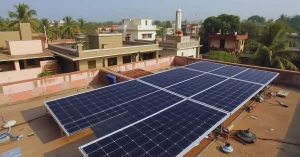
Modern iron roof design increasingly incorporates solar panels seamlessly into the roofing system, combining energy generation with weather protection.
2. Green Roofing
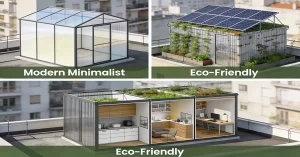
Lightweight iron structures support vegetation growth, combining metal durability with environmental benefits.
3. Smart Roofing Systems
Sensors embedded in modern designs monitor roof health, detecting leaks or structural issues before they become problems.
4. Recycled and Sustainable Materials
Manufacturers increasingly use recycled steel content and sustainable production methods in iron roofing.
5. Improved Insulation Technologies
Advanced composite materials provide better thermal insulation while maintaining lightweight benefits of metal roofing.
Conclusion
Iron roof design represents a practical, durable, and cost-effective roofing solution for Indian homes and businesses. Whether you choose traditional steel roof design or modern tin roof design systems, quality metal roofing offers unmatched durability against India’s diverse climatic challenges.
The combination of durability, low maintenance, cost-effectiveness, and environmental sustainability makes iron roofing an intelligent investment. With proper design, installation, and basic maintenance, your iron roof will protect your property for 20-40 years while keeping cooling costs low and adding value to your property.
When selecting an iron roof design for your project, prioritize quality materials, professional installation, and proper maintenance. Consider consulting with experienced roofing engineers who understand local climate conditions and can design a system specifically suited to your location and requirements.
For residential, commercial, or industrial applications, iron roof design continues to prove why it remains India’s preferred roofing choice for reliable, long-lasting weather protection.