
Roof Top Sheds
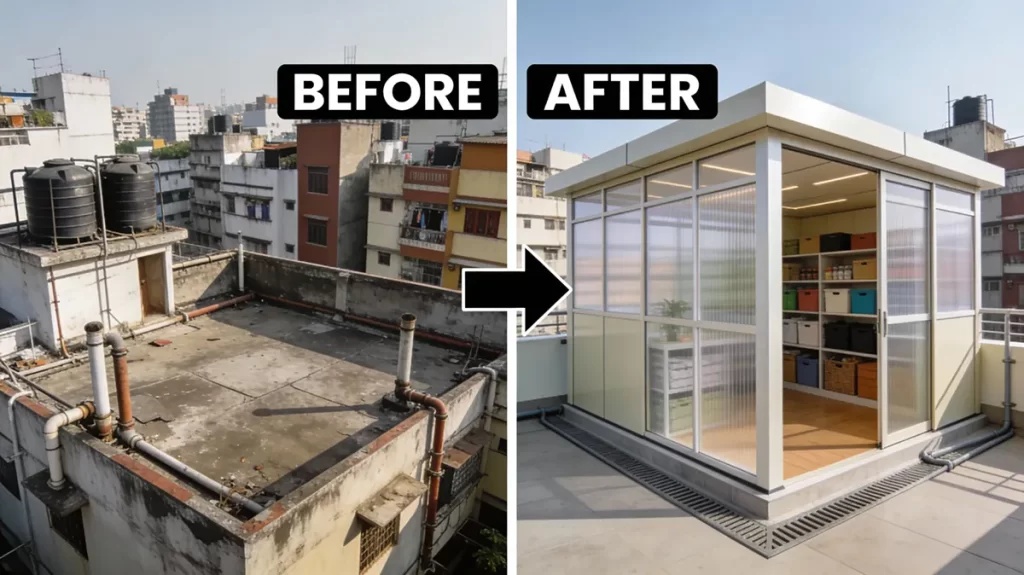
Urban living comes with a unique challenge that millions of Indian homeowners face daily: limited space. Property prices in cities like Kolkata, Mumbai, and Bangalore have skyrocketed, leaving residents with increasingly compact living quarters. Yet many of these homes possess an underutilized asset sitting right above them—their rooftop. What if you could transform that empty, wasted rooftop space into a functional, valuable extension of your property? This is where innovative rooftop shed design becomes your game-changer.
With over 15 years of expertise in shed manufacturing and installation, Undertaking Engineering Enterprise has helped hundreds of Kolkata homeowners and businesses unlock their rooftop potential through thoughtfully designed, durable shed solutions. In this comprehensive guide, we’ll explore five innovative rooftop shed design ideas, walk you through critical compliance requirements specific to West Bengal, compare roofing materials by cost and lifespan, and provide the roadmap you need to transform your rooftop from wasted space into a valuable asset.
Understanding Roof Top Sheds: Definition, Purpose & Benefits
Before diving into design styles, let’s clarify what we mean by a rooftop shed and why thousands of Indian urban dwellers are choosing this solution. A rooftop shed is a structured covering or enclosed structure built on your building’s terrace or rooftop, designed to provide storage, protection, or utility space without consuming any of your floor area. This is distinctly different from a balcony shed (which extends from a balcony) or a permanent rooftop construction (which becomes part of the building’s permanent structure).
The primary purposes of a rooftop shed are straightforward yet powerful. First, it maximizes vertical space utilization—a critical concern in Indian cities where every square foot of land carries premium value. Second, it provides weather protection for equipment, vehicles, or seasonal items that would otherwise deteriorate under intense UV exposure or monsoon rains. Third, it can reduce the heat penetration into your living spaces below, providing natural cooling benefits during scorching Indian summers. Finally, it increases your property’s functional value and perceived market worth.
Why do urban Indian homeowners specifically choose rooftop sheds? The answer lies in the space crisis and rising property prices. A ground-level extension to your home might require ₹5 to 10 lakhs of investment while consuming precious floor space. A 100 square foot rooftop shed, by contrast, costs just ₹20,000 to ₹40,000 depending on materials, adds zero floor area consumption, and delivers impressive functionality. For apartment dwellers, rooftop sheds offer the only expansion option available. For commercial properties and agricultural operations, they provide affordable storage solutions without the bureaucratic complexity of full-scale construction.
The benefits extend beyond mere functionality. A well-designed rooftop shed delivers weather protection from the intense UV radiation that damages stored items, shields contents from heavy monsoon rains that characterize Indian weather patterns, regulates interior temperature through proper design (reducing cooling costs by 5-10%), and creates an aesthetically pleasing addition to your property’s architecture. The durability numbers are compelling: galvanized steel roofing lasts 60-70 years, polycarbonate solutions last 25-30 years, and even budget options deliver 15-20 years of reliable service. This represents one of the best long-term investments for Indian homeowners seeking to maximize their property’s potential.
Critical Factors Before Building Your Rooftop Shed: Design Considerations
Your rooftop shed design must navigate four critical considerations: local building regulations, structural safety, aesthetic compatibility, and climate-specific factors. Overlooking any one of these can result in expensive rework, legal complications, or premature deterioration of your investment.
Local Building Regulations: The Kolkata & West Bengal Reality
This is where most online guides fail to meet your needs. Generic rooftop shed articles ignore the fact that you’re building in Kolkata, which operates under specific regulations that changed significantly in 2025. The Kolkata Municipal Corporation (KMC) now strictly regulates rooftop constructions with regulations that directly impact your design plans.
Here’s what you must know if you’re in Kolkata or West Bengal:
The 50% Open Space Rule is non-negotiable. The KMC mandates that a minimum of 50% of your rooftop must remain completely open and unencumbered. This means if your rooftop is 200 square feet, you can cover a maximum of 100 square feet. This regulation is in place for safety, emergency evacuation, and fire safety purposes. Many homeowners unknowingly violate this rule by building oversized sheds, only to face costly demolition orders. Calculate your shed dimensions carefully against this requirement before proceeding.
Stakeholder Consent is mandatory for residential buildings. If you live in an apartment building or shared residential property, every single occupant and stakeholder must unanimously approve your rooftop shed project. This isn’t a simple majority vote—it’s unanimous consent. This requirement exists because the rooftop technically belongs to all residents. Obtain a No Objection Certificate (NOC) from all stakeholders in writing before you start construction.
The KMC’s recent 2025 directive also prohibits the separate commercial lease or sale of terraces, a change that affects property owners looking to monetize rooftop space. Understand these implications before designing your project.
The National Building Code (NBC) of India provides additional requirements covering fire safety, structural load calculations, ventilation, and emergency access. Your shed must comply with NBC standards for fire-resistant materials, particularly for non-combustible flooring and furnishings in structures above 15 meters in height.
Structural Integrity and Safety Requirements
Your rooftop structure must safely bear its own weight plus contents plus wind forces without compromising the building below. A structural engineer’s assessment is non-negotiable—not optional. This professional will calculate your roof slab’s load-bearing capacity, account for the added weight of the shed structure and its contents, and ensure a proper safety margin.
Wind resistance is critical for Indian weather patterns. Monsoon winds can exceed 80-100 km/h in coastal regions and reach 60-80 km/h inland. Your shed structure must withstand these forces without deformation or failure. This requirement directly impacts your choice of materials and fastening methods. Polycarbonate panels, for instance, need reinforced framing for high wind areas, while galvanized steel offers superior wind resistance.
Foundation strength and proper anchoring prevent your shed from becoming airborne during storms. High-quality bolts (preferably stainless steel for corrosion resistance), proper spacing, and adequate penetration into the concrete slab are essential. Poor installation here is the leading cause of rooftop shed failures during monsoons.
Aesthetic Compatibility with Surroundings
Your rooftop shed doesn’t exist in isolation. It sits atop your building, visible to neighbors, passersby, and your own residents. The design should complement your building’s existing architectural character rather than clash with it.
For modern apartments in urban Kolkata, a sleek, minimalist design with clean lines and neutral colors creates visual harmony. For traditional homes, softer curves, earth-toned finishes, and materials that echo local building traditions work better. A traditional terracotta-finished shed looks awkward on a glass-and-steel modern apartment, just as a minimalist steel frame looks out of place on a heritage property.
Color selection matters significantly. Light colors (whites, creams, light grays) reflect solar heat, reducing interior temperature increases by 5-10°C during summer. Dark colors absorb heat, making your living spaces uncomfortably warm. Beyond thermal benefits, light colors photograph better, age gracefully, and harmonize with most architectural styles.
Climate-Specific Design Factors for Indian Weather
India’s diverse climate means one design doesn’t suit everywhere. Kolkata’s monsoon rains demand robust drainage systems. Interior plains experience intense heat that requires high Solar Reflectance Index (SRI) materials. Coastal regions face salt spray corrosion. Hill stations experience temperature fluctuations.
For monsoon regions like Kolkata and West Bengal, design your shed with a minimum 2-3 degree slope for water runoff. Install gutters and downspout systems that channel water away from the building. Avoid flat-roof designs that promote water pooling, a breeding ground for mosquitoes, and a source of structural stress. Ensure all seams are sealed with weather-resistant membranes. Consider water harvesting integration—your rooftop shed can become part of your rainwater collection system.
For heat-intensive regions, prioritize ventilation. High-SRI materials (polycarbonate with UV coatings offer 95-99% protection) prevent interior temperature buildup. Paint choices matter: white or cream-colored coatings reduce heat absorption dramatically compared to darker options.
UV resistance is universally important across India. The sun’s ultraviolet radiation degrades materials, fades colors, and weakens structural integrity. Polycarbonate and treated metal sheets with UV-blocking coatings extend your shed’s lifespan by 10-15 years compared to unprotected materials.
Five Innovative Roof Top Shed Design Ideas for Every Need
Now that you understand the foundational requirements, let’s explore five design approaches, each suited to different needs, aesthetics, and applications.
Design 1: Modern Minimalist Rooftop Sheds
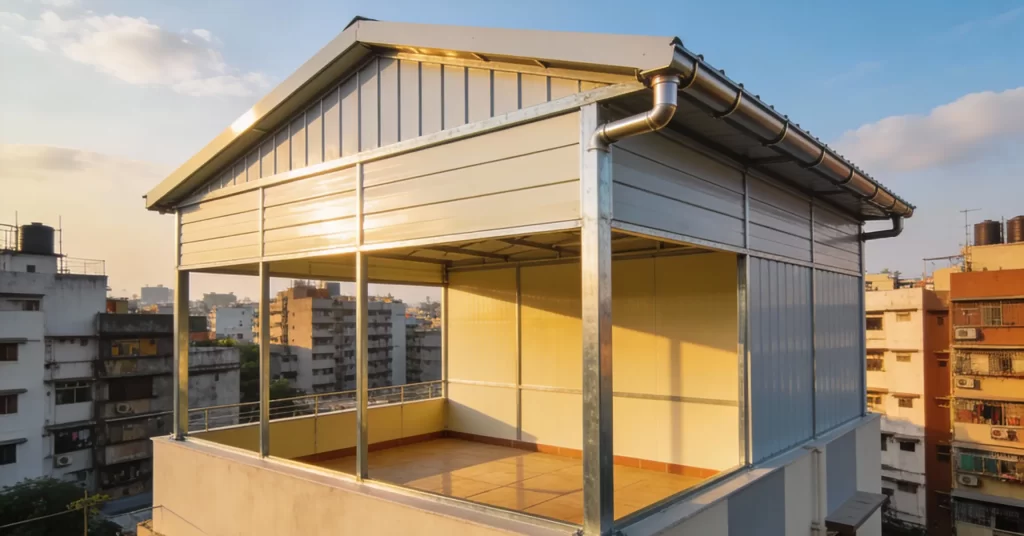
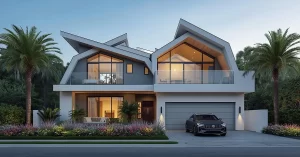
Modern minimalism dominates contemporary urban design, and it translates beautifully to rooftop shed design. This style emphasizes clean geometric lines, functional simplicity, and uncluttered aesthetics. A minimalist rooftop shed features straightforward rectangular or square shapes, smooth surfaces, and minimal ornamentation.
This design style works perfectly for urban apartments in Kolkata’s modern residential complexes, contemporary commercial buildings, and homes with minimalist or modern architecture. The visual language matches glass-and-steel building facades and complements contemporary interior design trends.
Structurally, minimalist sheds typically use steel frames with polycarbonate or corrugated metal panels. Steel provides strength and clean lines; polycarbonate or metal panels offer weather resistance without the visual bulk of solid walls. The result is a structure that appears sleek and space-conscious rather than bulky or imposing.
The advantages are compelling. Maintenance is straightforward—clean lines and smooth surfaces collect less dust and debris than ornate designs. Installation is faster because the geometry is simple and standardized. Cost is moderate: expect ₹20,000 to ₹35,000 for a 100 square foot minimalist shed with quality materials. The aesthetic fits seamlessly with modern neighborhoods. Durability is excellent when proper materials are chosen.
The primary consideration is precision installation. Minimalist designs expose any misalignment or poor workmanship. Slight gaps or uneven surfaces become visible eyesores. You need skilled installation professionals—which is why Undertaking Engineering’s 15+ years of experience matters. We’ve completed dozens of minimalist rooftop sheds across Kolkata that demonstrate clean, professional execution.
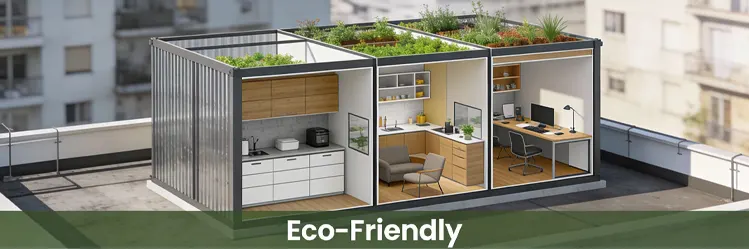
Design 2: Eco-Friendly and Sustainable Rooftop Sheds
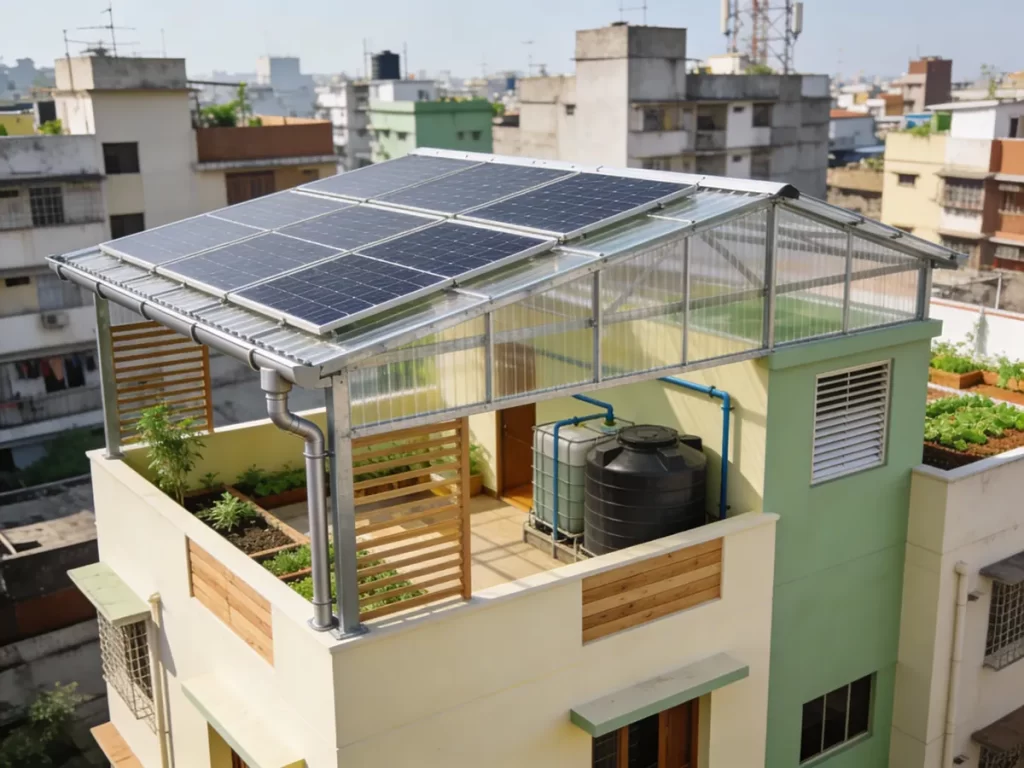
Environmental consciousness is rising among Indian homeowners, and eco-friendly rooftop shed design captures this growing demand. This design philosophy prioritizes recyclable materials, minimal environmental impact, and integration with renewable energy systems.
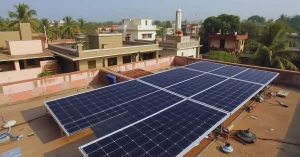
An eco-friendly rooftop shed uses galvanized steel (100% recyclable), sustainably harvested wood accents, recycled metal components, and structural paints with low volatile organic compounds (VOCs). The design incorporates open ventilation to reduce cooling needs. Many eco-friendly sheds integrate solar panel mounting structures, transforming the rooftop into a productive energy-generation platform. Water harvesting integration is standard—gutters channel monsoon rains into collection tanks for garden or cleaning use.
The environmental benefits are substantial. Galvanized steel is infinitely recyclable without quality degradation. Solar integration reduces your household’s carbon footprint and energy bills simultaneously. Water harvesting addresses India’s water scarcity challenges. Natural ventilation reduces reliance on cooling systems for stored items. Low-VOC paints prevent harmful chemical off-gassing into your environment.
The cost is slightly higher than standard designs. Expect ₹25,000 to ₹40,000 for a 100 square foot eco-friendly shed because sustainable materials command a premium. However, long-term benefits offset the higher upfront cost. Galvanized steel lasts 60-70 years (compared to 20 years for coated sheets), and solar integration generates electricity savings month after month. Over a 20-year horizon, an eco-friendly shed often costs less per year of service than cheaper alternatives.
This design appeals particularly to environmentally conscious professionals in Kolkata’s IT and corporate sectors, sustainability-minded families, and properties pursuing green building certifications. It positions your home as forward-thinking and environmentally responsible.
Design 3: Multi-Functional Rooftop Sheds
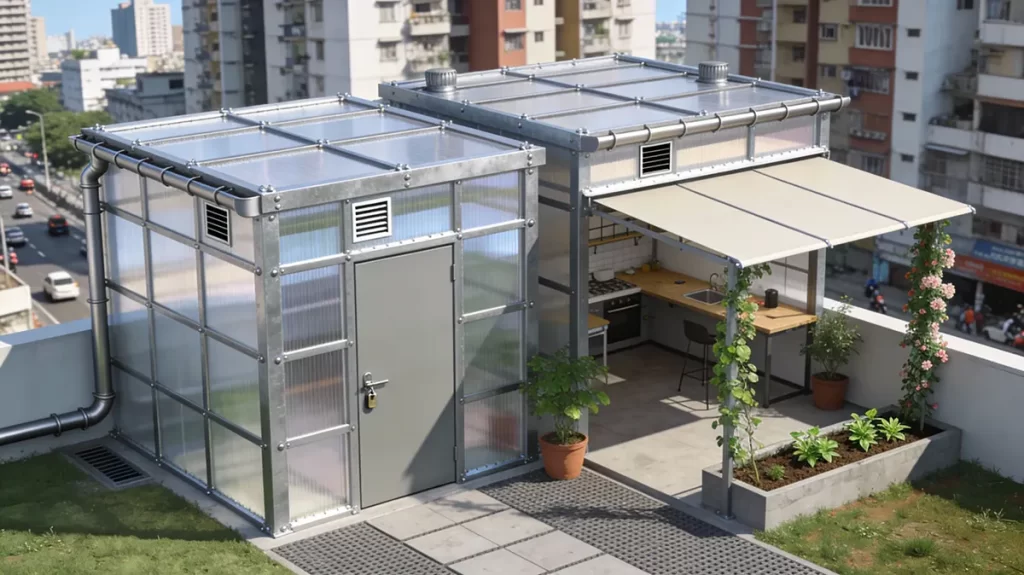
Many homeowners need shed space but also want secondary functionality. Multi-functional design solves this elegantly by creating compartmentalized rooftop areas serving multiple purposes simultaneously.
Consider a 100 square foot multi-functional rooftop shed divided into: 60 square feet of enclosed storage for tools, seasonal items, and equipment, and 40 square feet of open or semi-covered space functioning as a work area, recreational zone, or garden pergola. A freelancer might use the shed structure to support a workspace area where morning work overlooks the city. A family might create a monsoon-protected garden space. A commercial property owner might install the shed structure to support solar panels while maintaining usable rooftop space.
Design features enabling multi-functionality include modular sections with independent access doors, partition walls that can be removed or repositioned, varying heights accommodating different functional zones, and flexible interior layouts. Modern multi-functional sheds often include partition walls on sliding systems, allowing users to reconfigure their space as needs evolve.
The value proposition is exceptional. Your ₹15,000 to ₹25,000 investment in a multi-functional rooftop shed becomes a ₹2 to ₹5 lakh property value addition. Real estate professionals recognize that multi-functional rooftop improvements significantly enhance perceived property value and marketability. A family considering your apartment notices not just additional storage, but a versatile outdoor living space—a meaningful difference in their purchasing decision.
This design appeals to space-conscious urban professionals, home-based workers, entrepreneurs, and families seeking maximum utility from limited property. It represents intelligent space optimization that multiplies your property’s functionality without expanding its footprint.
Design 4: Rustic and Traditional Rooftop Sheds
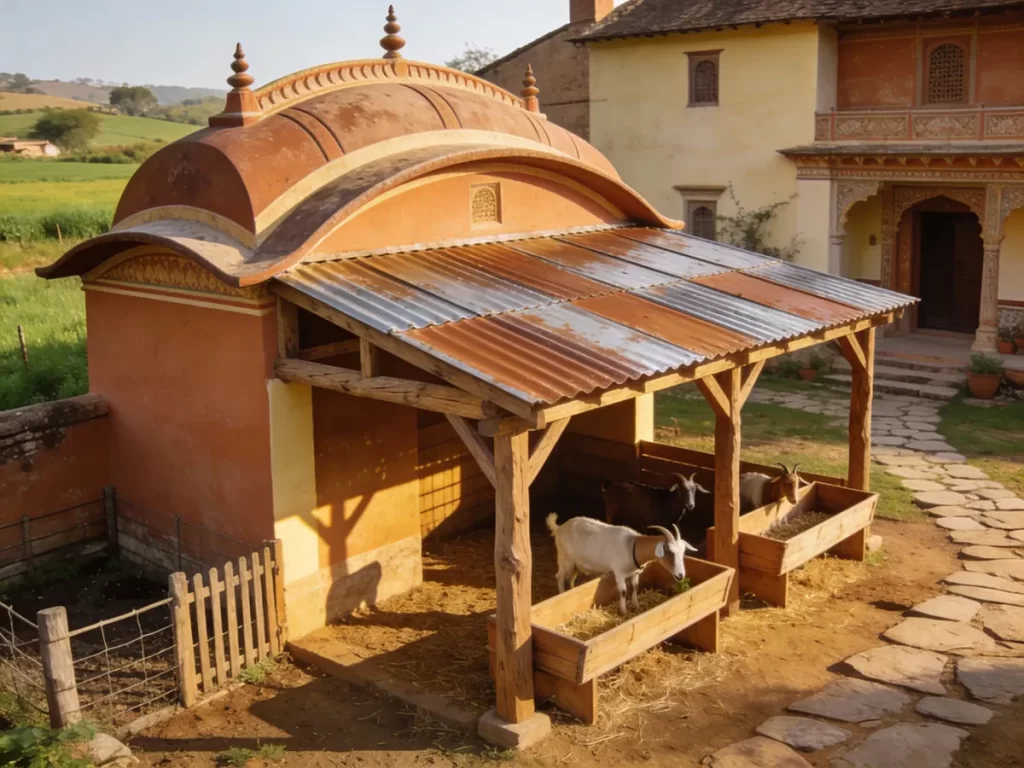
Not every property demands modern minimalism. Heritage homes, farmhouses, country estates, and traditional-style properties benefit from rustic shed designs that honor architectural continuity and cultural aesthetics.
A rustic rooftop shed incorporates earth-tone colored coated sheets, perhaps with natural wood frame supports visible from certain angles, and design curves that echo traditional architectural elements. The finish is deliberately less “perfect” than modern designs—texture, subtle color variations, and organic lines create warmth and character.
Rustic designs are particularly appropriate for agricultural properties, which is where Undertaking Engineering’s expertise shines brightest. Our goat farm roofing solutions exemplify this category. Goat farmers require robust, durable roofing that withstands weather extremes, accommodates animals safely, and integrates into rural property aesthetics. A rustic shed structure housing goat enclosures blends naturally with the agricultural landscape while providing superior protection compared to improvised shelters.
Beyond agriculture, rustic designs suit heritage conservation properties. If your home features traditional Kolkata-style architecture with terracotta tiles and wooden details, a rustic rooftop shed complements this character beautifully. The design preserves your property’s historical aesthetic while adding modern functionality.
Cost for rustic designs typically ranges from ₹20,000 to ₹35,000 for a 100 square foot shed, similar to minimalist designs but using different material finishes. The investment in maintaining architectural harmony often pays dividends in community perception and personal satisfaction. Your neighbors recognize the thoughtful design that respects the neighborhood’s character.
Design 5: Climate-Adaptive Rooftop Sheds
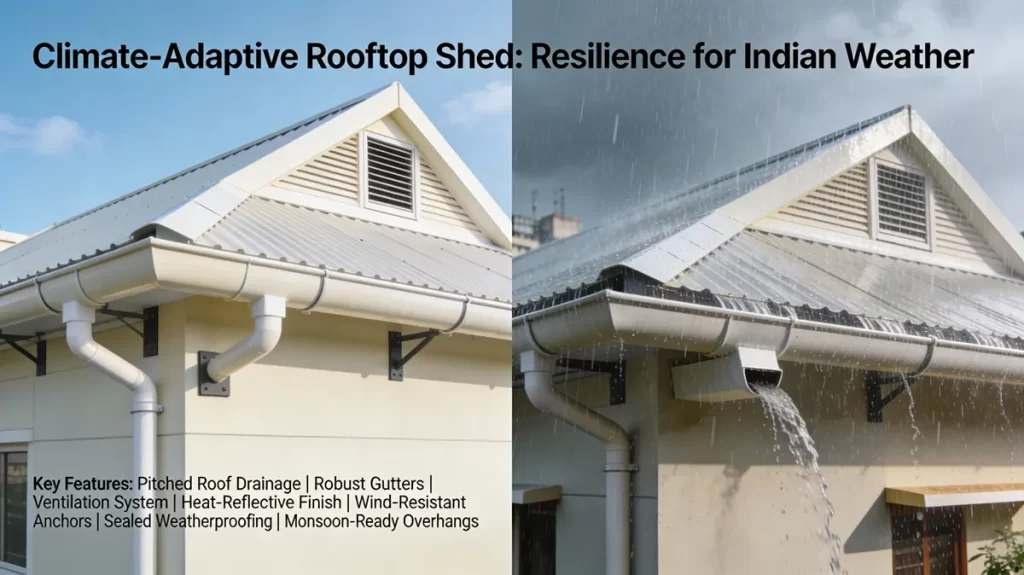
While the previous four designs emphasize aesthetics and functionality, climate-adaptive design prioritizes performance in your specific Indian climate. This approach customizes every element—roof slope, ventilation, materials, orientation, and color—to address your region’s particular weather challenges.
For monsoon regions like Kolkata and West Bengal, climate-adaptive design incorporates steeply pitched roofs (minimum 2-3 degrees, ideally more) for rapid water runoff, large gutters and drainage systems, completely sealed seams with marine-grade waterproofing, and ventilation designed to prevent moisture accumulation. The shed structure itself is positioned to minimize exposure to prevailing rain-bearing winds. Windows and vents face away from monsoon wind directions.
For heat-intensive regions of interior India, climate-adaptive design emphasizes light coloring (white or cream finishes reflecting 85-90% of solar radiation versus 20-30% for dark colors), extensive ventilation with operable vents that create air circulation without requiring active cooling, high-SRI materials like polycarbonate with UV coatings, and strategic shading from overhanging eaves that block summer sun while allowing winter sun penetration.
For all Indian regions, thermal expansion joints accommodate material movement as temperatures fluctuate between seasons. Quality fasteners resist corrosion from salt air (coastal regions) or temperature cycling (hill stations). Ventilation prevents condensation and moisture-related problems during seasonal transitions.
The cost premium is moderate—expect 10-15% higher pricing compared to standard designs in your climate zone. However, this investment yields substantial returns. Properly climate-adapted sheds extend lifespan by 10-15 years, require less maintenance, and perform superior to one-size-fits-all designs. A ₹25,000 climate-adaptive shed that lasts 70 years costs significantly less annually than a ₹18,000 standard shed requiring replacement after 45 years.
Maximizing Efficiency: Storage Organization and Best Practices
Your shed structure is just the foundation. How you organize and maintain it determines whether your rooftop investment becomes a valuable asset or a cluttered liability.
Efficient Organization Tips
Start by planning your space with zones for different item categories. Establish a tools zone with wall-mounted racks and pegboards. Create a seasonal items zone for holiday decorations, winter clothing, and occasion-specific equipment. Designate a regularly-used items area at eye level for things you access frequently. Reserve higher shelves and overhead storage for lightweight seasonal items.
Implement a labeling system so you instantly identify contents without opening every container. Digital labels using your phone camera linking to a spreadsheet inventory work excellently for renters and those who may move. Physical weatherproof labels suit permanent installations. Color-coding containers by category (red for tools, blue for seasonal, green for outdoor, etc.) provides visual organization even from a distance.
Maximize vertical space through wall-mounted shelving systems, hanging racks, and overhead storage. Store heavy items at waist height where they’re safe to retrieve. Light seasonal items go overhead. Frequently accessed tools stay at arm’s reach. This organization principle multiplies your usable space without expansion.
Weatherproofing your stored items prevents monsoon damage. Use sealed containers rather than open shelves. Place moisture-absorbing materials (silica gel packets, calcium carbonate dehumidifiers) in storage areas prone to humidity. Install ventilation fans during the pre-monsoon season to expel accumulated moisture before heavy rains arrive.
Best Roofing Materials: Cost, Durability, and Weather Resistance Comparison
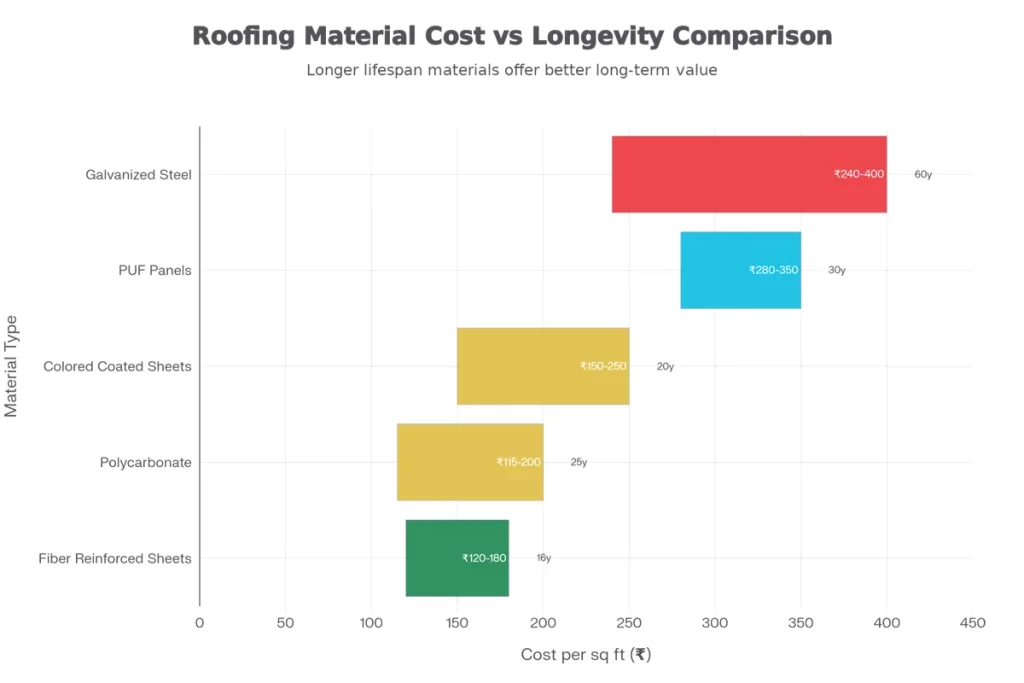
Your material choice is perhaps the most consequential decision in rooftop shed design. Here’s a transparent comparison based on actual Indian market pricing and durability data:
Galvanized Steel:
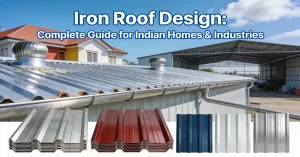
Galvanized Steel Costs ₹240 per square foot, delivers 60-70 year lifespan, excellent corrosion resistance, superior wind resistance, and low maintenance requirements. For a 100 square foot shed, expect ₹24,000 material cost. While not the cheapest option upfront, the annual cost (₹24,000 ÷ 65 years = ₹369 annually) is the lowest among all materials. Best for permanent installations where longevity matters. This is our most-recommended material for residential and commercial applications.
Polycarbonate Sheets:
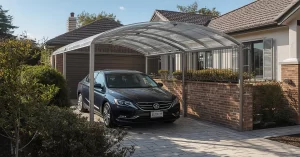
Polycarbonate Sheets cost ₹115-₹200 per square foot, deliver a 25-30 year lifespan, offer 95-99% UV protection, allow light transmission (useful for creating semi-open sheds), and provide moderate wind resistance (requires robust framing). For a 100 square foot shed, expect ₹11,500-₹20,000 material cost. Annual cost runs ₹460-₹800, higher than galvanized steel but lower than some alternatives. Best for applications requiring light transmission, such as car parking that doesn’t completely darken the space below, plant nurseries, or garden shades.
Colored Coated Sheets:
Colored Coated Sheet Costs ₹150-₹250 per square foot, delivers a 20-25 year lifespan, offers good aesthetics with color options, moderate rust prevention, and reasonable wind resistance. For 100 square feet, expect ₹15,000-₹25,000. Annual cost runs ₹600-₹1,250. Best for aesthetically-conscious homeowners prioritizing visual appearance, traditional designs where colors matter, or properties where neighbors see your shed regularly.
PUF (Polyurethane Foam) Panels:
PUF (Polyurethane Foam) Panel Costs ₹280-₹350 per square foot, delivers a 25-35 year lifespan, offers superior thermal insulation (important for temperature-sensitive storage), excellent weather resistance, and good structural rigidity. For 100 square feet, expect ₹28,000-₹35,000. Annual cost runs ₹800-₹1,400. Best for climate-controlled storage, pharmaceutical or food storage requiring temperature stability, or regions with extreme heat. Premium option for premium requirements.
Fiber Reinforced Sheets:
Fiber Reinforced Sheet Costs ₹120-₹180 per square foot, delivers a 12-20 year lifespan, offers budget-friendly pricing, fair weather resistance, and limited durability in harsh climates. For 100 square feet, expect ₹12,000-₹18,000. Annual cost runs ₹600-₹1,500 (high replacement frequency makes it expensive long-term). Best for temporary installations, budget-conscious buyers with 15-year replacement tolerance, or climate-protected areas.
Our Recommendation:
For most Kolkata residents, galvanized steel offers the best lifetime value despite a higher upfront cost. Its 60-70 year lifespan, minimal maintenance, superior weather resistance, and lowest annual cost make it the intelligent long-term investment. Polycarbonate suits specific applications like car sheds. PUF panels work for temperature-critical storage.
Weather-Resistant Features Essential for Indian Climates
Your material choice is only part of the weather resistance. Design details determine whether your investment remains protected for decades.
Drainage Systems:
Design minimum 2-3 degree roof slopes for water runoff. Install gutters sized for your region’s rainfall intensity. Kolkata experiences 180-200 cm of annual rainfall; gutters must handle this volume without overflow. Downspouts must direct water completely away from your building foundation. Avoid flat roofs that pool water—they breed mosquitoes, create structural stress, and fail prematurely.
Waterproofing:
Seal every seam between panels using silicone-based or polyurethane sealants rated for outdoor use. Weather-resistant membranes under roofing materials prevent water penetration through fastener holes or panel overlaps. These details cost just ₹1,000-₹2,000 but prevent ₹50,000+ in water damage.
UV Coatings:
Polycarbonate with UV-blocking coatings provides 95-99% ultraviolet protection. Painted steel should use UV-resistant finishes. Unprotected materials degrade rapidly under India’s intense sun. The investment in UV protection extends your shed’s lifespan by 10-15 years.
Ventilation Systems:
Prevent moisture accumulation through strategic ventilation. Roof vents allow hot air to escape during summer. Soffit vents near ground level draw fresh air in, creating circulation that prevents condensation buildup. During monsoon season, ventilation prevents moisture-related mold growth and material deterioration.
Corrosion-Resistant Fasteners:
Use stainless steel bolts, nuts, and brackets instead of mild steel. Stainless steel costs 3-4 times more but lasts indefinitely without rusting. Mild steel fasteners corrode within 3-5 years, creating rust stains, structural weakness, and maintenance nightmares. This ₹500-₹1,000 investment prevents ₹20,000 in repairs.
Monsoon-Specific Features:
Install extended gutters projecting 6-12 inches beyond the shed perimeter. Ensure downspout systems don’t create splash-back near your building. Consider water harvesting integration—divert gutter water into storage tanks for garden use. Add mosquito-proof ventilation screens to prevent insect breeding during monsoon.
Maintenance Best Practices and Expected Lifespan
Annual inspection is essential. Check for fastener corrosion, seal deterioration, water stains indicating leaks, and structural movement indicating settling. Pre-monsoon inspection (May-June) should focus on drainage adequacy and ventilation function. Pre-summer inspection (March-April) should evaluate UV protection and cooling system function if applicable. Annual maintenance costs typically run ₹2,000-₹5,000 for cleaning, minor repairs, and sealant reapplication.
With proper maintenance, even standard-quality materials deliver expected lifespans. Neglected sheds deteriorate prematurely. A ₹20,000 shed maintained consistently lasts 40+ years. The same shed neglected may fail in 15 years. This makes maintenance habits as important as initial material selection.
Undertaking Engineering Enterprise: 15+ Years of Rooftop Shed Excellence
You’re making a significant decision about your property. The difference between professional expertise and amateur installation can mean decades of reliable service versus years of maintenance headaches.
Undertaking Engineering Enterprise brings 15+ years of specialized experience in rooftop shed design, manufacturing, and installation across Kolkata, West Bengal, and surrounding regions. Our portfolio includes hundreds of residential car sheds, commercial installations, agricultural roofing solutions (particularly goat farm roofing—a specialty we’ve perfected over the years), and custom design projects addressing unique client needs.
Why Professional Design and Installation Matters
Structural compliance ensures your shed meets National Building Code requirements and bears its design load safely. A professional structural engineer’s assessment prevents catastrophic failures during monsoons or under unexpected weight loads. This isn’t a place to compromise.
Local regulatory expertise is invaluable. Navigating Kolkata’s 50% open space rule, stakeholder consent requirements, and fire safety standards requires deep understanding of local building departments. We’ve managed dozens of KMC approvals and know exactly which documents are required, which concerns regulators raise, and how to address them efficiently.
Material selection for your specific climate ensures longevity. We assess your building’s exposure (full sun, partial shade, wind-exposed, protected), your storage requirements, and your budget to recommend the optimal material. Not every project needs galvanized steel; some genuinely suit polycarbonate or PUF panels. We match material to need.
Custom solutions acknowledge that your property is unique. Standard cookie-cutter shed designs don’t fit every rooftop. We conduct site surveys, measure existing structures, assess load-bearing capacity, understand your functional requirements, and design solutions tailored to your specific situation.
Warranty and post-installation support provide peace of mind. We stand behind our work with industry-standard warranties covering materials and workmanship. If issues arise post-installation, our team is accessible for maintenance, repairs, and adjustments.
Our Design and Installation Process
Step 1: Consultation and Assessment
We begin with a comprehensive consultation understanding your needs, budget, timeline, and any existing constraints. Our team conducts a site survey measuring your rooftop dimensions, assessing load-bearing capacity, identifying utility lines or obstacles, and photographing existing conditions. We discuss your aesthetic preferences, functional requirements, and long-term plans for the space.
Step 2: Design and Compliance
Based on the assessment, we create detailed design plans including structural drawings, material specifications, and 3D visualizations so you can preview your completed shed. We verify that designs comply with KMC regulations (50% open space rule), National Building Code standards, fire safety requirements, and local building department guidelines. Design revisions are made based on your feedback until you’re completely satisfied.
Step 3: Material Selection
We present material options with transparent pricing, lifespan comparisons, and climate appropriateness. Together, we select materials matching your priorities—whether that’s maximum durability (galvanized steel), light transmission (polycarbonate), aesthetics (colored coatings), thermal performance (PUF panels), or budget optimization.
Step 4: Professional Installation
Our experienced installation team executes the work with precise attention to quality. We handle all structural connections, waterproofing, finishing touches, and integration with your existing building. Quality checks occur at multiple stages, ensuring proper execution.
Step 5: Post-Installation Support
After installation, we provide guidance on maintenance schedules, storage best practices, and seasonal preparation. Our team remains available for adjustments, repairs, and support throughout the warranty period and beyond.
Service Areas and Customization Options
We serve residential properties (apartment buildings and standalone homes), commercial buildings (offices, retail, warehouses), agricultural properties (goat farms, poultry operations, crop storage), and industrial facilities across Kolkata and West Bengal. Our specializations include car parking sheds, agricultural roofing (particularly goat farm roof solutions), commercial storage structures, and custom multi-functional designs.
Customization options are extensive. Choose your materials (galvanized steel, polycarbonate, coated sheets, PUF panels), select your colors and finishes (neutral minimalist or earth-tone rustic), decide your configuration (fully enclosed, semi-open, or multi-zoned), and determine your features (ventilation systems, water harvesting, solar mounting support). We manufacture and install solutions matching your vision.
Building Regulations and Compliance: Navigating Kolkata's Requirements
This is the section distinguishing this guide from generic online information. Kolkata-specific building regulations will make or break your rooftop shed project. Ignoring these requirements invites expensive rework, legal complications, or demolition orders.
West Bengal and Kolkata Compliance: Recent Regulatory Changes (2025)
The regulatory landscape shifted significantly in 2025, and your plans must align with current rules, not outdated guidelines.
The 50% Open Space Mandate is the most important Kolkata regulation affecting rooftop sheds. The KMC requires that a minimum 50% of your rooftop area must remain completely open, unencumbered, and accessible. If your building’s terrace measures 200 square feet total, you cannot legally cover more than 100 square feet with shed structures. Exceeding this limit violates KMC regulations and can result in demolition orders or hefty fines.
Calculating compliance requires precision. Measure your total rooftop area (excluding parts already covered by penthouses, water tanks, or equipment). Understand what the KMC counts as “coverage”—permanent structures count; movable canopies might not (confirm with your local KMC office). Design your shed to remain comfortably under 50% coverage.
Stakeholder Consent for Residential Buildings is non-negotiable for apartments or shared residential properties. Every single occupant and stakeholder must provide written consent for your rooftop shed project. This isn’t a majority vote or a building committee decision—it’s unanimous consent. You must obtain a No Objection Certificate (NOC) from all stakeholders before submitting plans to the KMC.
The process involves: (1) obtaining a certified list of all property occupants from your housing society office; (2) presenting your detailed plans to each occupant explaining the shed design, materials, and compliance with regulations; (3) securing written consent from every single occupant; (4) obtaining formal NOC from your housing society or building authority; (5) submitting this NOC along with your KMC permit application.
This requirement exists because your rooftop technically belongs to all residents. Any one neighbor can object and potentially block your project. Engage your neighbors early, demonstrate that your design complies with all regulations, explain the benefits (increased property value, improved aesthetics, additional functionality), and address concerns professionally. Most neighbors will consent when convinced the project is legal and benefits the building.
Recent 2025 Directive on Commercial Use prohibits the separate lease or sale of terraces for commercial purposes. Property owners cannot now separately commercialize rooftop space through rental agreements or sales. This affects property owners considering monetizing rooftop space, but doesn’t restrict personal use of your own rooftop shed.
Timeline for Regulatory Changes:
These 2025 changes are recent, and some local building inspectors may not be fully updated. When submitting your permit application, reference the specific KMC circular and be prepared to educate inspectors if needed. Having your documentation thoroughly organized prevents delays.
National Building Code (NBC) Requirements for Safety
Beyond KMC regulations, India’s National Building Code sets safety standards your shed must meet.
Fire Safety Standards require that in buildings exceeding 15 meters in height, all rooftop structures use non-combustible materials for flooring and furnishings. Polycarbonate panels are acceptable for roofing, but if your building is a high-rise, ensure flooring materials won’t contribute to fire spread. Check the specific height classification of your building.
Structural Safety Requirements mandate engineering calculations demonstrating that your roof slab can safely bear the shed structure’s weight plus contents plus wind loads with proper safety margins. This requires a licensed structural engineer’s assessment and certification.
Emergency Access and Safety provisions ensure that fire escapes, emergency exits, and evacuation routes remain accessible. Your shed cannot block emergency access points or impede firefighter access to the building.
Ventilation Specifications require adequate air circulation to prevent hazardous gas accumulation (particularly for buildings with parking or mechanical systems below the rooftop).
Accessibility Preservation mandates that common access areas remain accessible to all building residents for maintenance of utilities and safety equipment.
Fire Safety and Non-Residential Building Rules
If your building is non-residential (commercial, industrial, institutional), additional fire safety rules apply. Your rooftop shed must have non-combustible flooring—this usually means concrete, stone, or ceramic tiles rather than wood or laminate. Fire-resistant paint and finishes are required. Electrical installations (if any) must comply with fire safety codes. Fire-fighting equipment must remain accessible. Exit signage and emergency lighting must comply with national standards.
These requirements aren’t optional or negotiable. Non-compliance can result in prosecution, fines, or forced demolition.
Getting Professional Approval: Permits, Certifications, and Timeline
The approval process involves multiple steps and typically requires 3-6 months from the approval application.
Required Certifications:
Structural engineer’s report confirming the roof slab can bear the intended load
Architectural drawings prepared by a licensed architect showing plan, elevation, and section views
Material specifications documenting the roofing materials’ properties and certifications
Fire safety compliance report (for high-rise buildings)
Environmental impact assessment (for large structures)
The approval process involves multiple steps and typically requires 3-6 months from the approval application.
Permissions Required:
KMC/local building authority approval and construction permit
Fire department approval (for high-rise buildings)
Electricity department approval (if electrical work is involved)
Housing society/building authority NOC (for residential buildings)
Documentation Checklist:
Original property title documents and ownership proof
Building plans filed with the municipal corporation
Detailed architectural drawings of the proposed shed
Structural engineer’s calculations and certification
Material test certificates proving specifications
Neighbor consent letters (residential buildings)
Housing society or authority NOC
Recent property photographs
Detailed cost estimate and construction timeline
Typical Approval Timeline:
Week 1-2: Prepare all documentation
Week 3-4: Submit to KMC/building authority
Week 5-10: Initial review and possible requests for modifications
Week 11-14: Revised submission and re-review
Week 15-24: Final approval (varies by location and inspector efficiency)
This timeline is realistic but not guaranteed. Some inspectors process applications quickly; others require multiple revisions. Working with professionals like Undertaking Engineering Enterprise who understand local bureaucracy can accelerate approvals by ensuring correct, complete submissions on the first attempt.
Transform Your Rooftop Space: Final Recommendations
We’ve covered significant ground—from regulatory requirements to design styles to material comparisons. Here’s what you should take away from this comprehensive guide.
Key Takeaways
Your rooftop is an underutilized asset with tremendous potential. In crowded Indian cities where property prices continue rising, transforming wasted rooftop space into functional storage, workspace, or recreational areas is one of the smartest investments you can make. A ₹15,000-₹35,000 rooftop shed investment typically increases property value by ₹2-₹5 lakhs—an exceptional return on investment.
The five design styles we explored—modern minimalist, eco-friendly, multi-functional, rustic, and climate-adaptive—offer options for every aesthetic preference and functional need. Whether you prioritize sleek modern appearance, environmental responsibility, maximum utility, architectural harmony, or climate resilience, there’s a design style matching your priorities.
Material selection fundamentally impacts your shed’s longevity and maintenance burden. Galvanized steel offers the best lifetime value for permanent installations. Polycarbonate suits applications requiring light transmission. Colored coatings prioritize aesthetics. PUF panels excel at thermal insulation. Budget materials work for short-term needs. Match materials to your actual requirements rather than simply choosing the cheapest option.
Local compliance is non-negotiable. Kolkata’s 50% open space rule, stakeholder consent requirements, and fire safety standards directly shape your design parameters. Ignoring these regulations invites expensive rework or legal complications. Build compliance into your plans from the beginning.
Professional design and installation deliver longevity, aesthetic quality, and peace of mind. The difference between expert execution and amateur work often means decades of reliable service versus recurring maintenance headaches. Invest in professional expertise.
Climate-adapted features extend your shed’s lifespan by 10-15 years. Proper drainage, ventilation, UV protection, corrosion-resistant fasteners, and seasonal maintenance habits keep your investment protected through Indian weather extremes.
Encouragement for Your Project
A well-designed rooftop shed isn’t just a functional storage structure—it represents intelligent property optimization and thoughtful space utilization. Every time you step onto your rooftop and see well-organized storage, protected equipment, and additional usable space, you’ll appreciate the decision to invest in quality design and professional installation.
Your rooftop transformation can be completed in 2-4 weeks of actual construction following the necessary approval period. Within six months of initiating the project, you could be enjoying significantly expanded functional space, improved property value, and the satisfaction of maximizing your property’s potential.
The creative possibilities are extensive. Your shed might become a monsoon-protected car parking solution, a secure storage area for valuable equipment, a temperature-controlled space for temperature-sensitive goods, a work area for home-based professionals, a garden extension for plant enthusiasts, or a multi-functional space serving different purposes seasonally.
Design isn’t just technical requirements and regulatory compliance—it’s an extension of your personal space and property vision. Work with professionals who understand both the technical demands and the aesthetic aspirations. Create something you’ll be proud to own.
Ready to Transform Your Rooftop? Next Steps
If you’re seriously considering a rooftop shed for your property, the next logical step is professional consultation. Undertaking Engineering Enterprise offers free site assessments and detailed design proposals tailored to your specific property, requirements, and budget.
Here’s how to get started:
Schedule a Free Consultation. Contact us to arrange a convenient time for our team to visit your property, assess the rooftop, and understand your functional needs and aesthetic preferences. This 30-45 minute consultation is completely free and creates a foundation for your project plan.
Receive a Detailed Proposal. Following the consultation, we’ll prepare a comprehensive proposal including: site-specific design drawings showing exactly what your finished shed will look like; material options with transparent pricing and lifespan comparisons; regulatory compliance confirmation; detailed cost breakdown; and construction timeline. You’ll see precisely what you’re investing in before making any commitment.
Regulatory Approval Assistance. Our team navigates the KMC permit process, prepares required documentation, coordinates with building departments, and ensures your project receives approval efficiently. We handle the bureaucratic complexity so you don’t have to.
Professional Installation. Once approved, our experienced installation team executes the work with precision, quality checks at multiple stages, and attention to detail, ensuring your shed performs flawlessly for decades.
Ongoing Support. We provide maintenance guidance, seasonal preparation advice, and responsive support for any future adjustments or repairs.
Undertaking Engineering Enterprise
Specialized Shed Manufacturing & Installation
Kolkata, West Bengal, India
Get Your Free Rooftop Assessment Today
Experience the Undertaking Engineering Difference: 15+ Years of Excellence
Final Word
Your rooftop represents untapped potential. Whether you’re seeking additional storage, protecting valuable equipment, creating new living space, or maximizing property value, a professionally designed rooftop shed transforms your space and elevates your property. Make the decision to invest in quality design, professional execution, and long-term durability.
Undertaking Engineering Enterprise is ready to transform your rooftop vision into reality. Contact us today for a free consultation and discover how we can help you maximize your property’s potential.